


2026-10-22 02:00:33
I’ve briefly seen the news regarding compromised intermediate certificates from some unknown CA (eMudrah) yesterday, but quickly dismissed them. I was like, shit happens, something leaked, certificates were already revoked, I was not affected, all good.
Well, it appears the problem was much bigger.
After a security researcher posted private keys for all certificates on GitHub (note the repository name), it has become clear that they weren’t private at all. Instead of 384 bits long random numbers, astonishingly, they were literally 4, 56, 66, 115, 155, 156, 230, 237.
And while you’re trying to comprehend this, an obligatory reminder of this timeless XKCD comic.
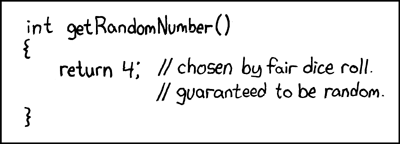
© XKCD
How could this even be possible? The most plausible explanation is that these keys originated from some test environment, which was accidentally pushed to production. Anyway, I’d call it the biggest security issue ever.
Internet and computers in general run on trust. You as a user trust developers of the operating system and browser you use, the internet provider, and so-called Certificate Authorities, who issue certificates protecting HTTPS sites. The chain of trust is as strong as its weakest point. And yesterday it appeared to be very weak.
I personally am going to review all online security measures I take. And I already have many in place, it’s just you always need to be a step ahead.
2026-10-21 03:54:45
Derek Sivers brilliantly explains in under five minutes what it takes to be a leader. Not all TED talks deserve your attention, but this one definitely does.
And Derek Sivers himself too. After his successful musician and entrepreneur careers, he wrote several books. If I am to recommend one, that would be Your Music and People, where Derek reflects on those periods of his life. He also tells an unbelievable story about his conflict with Apple and Steve Jobs in this book.
Besides that Derek started Now pages and maintains a collection of Now pages. And you should have Now page too.
2026-10-20 01:56:13
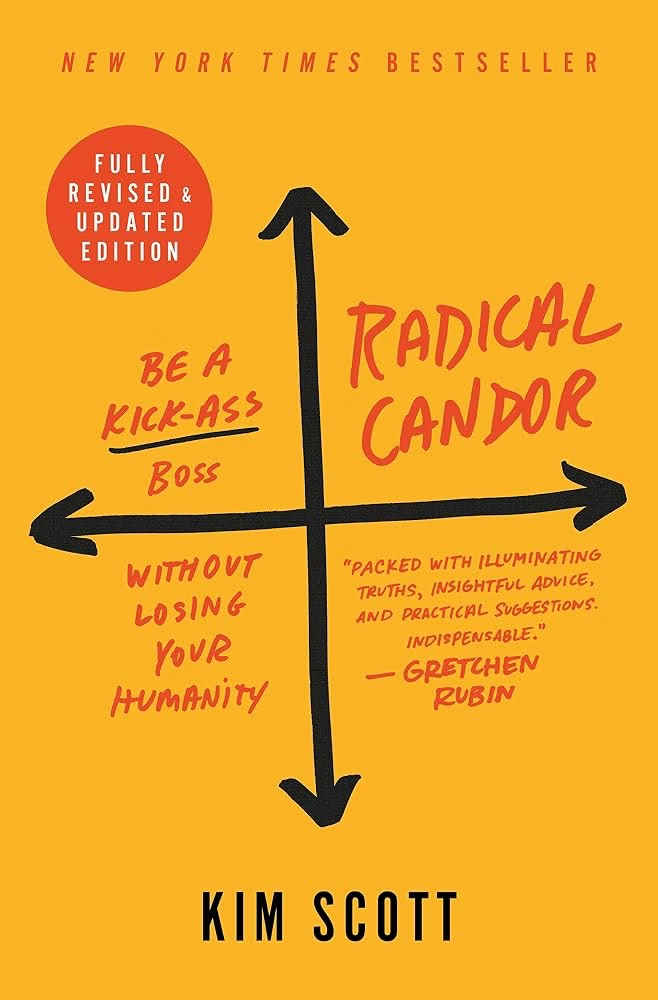
My former colleague Hadi Hariri has recommended this book to me a long time ago. He left JetBrains last month, so I decided it is a good time to finally write a review.
The book has been on my table for a past year or two and I tried to consult with it every time I had a difficult situation on the job. Critics say that the author too often remembers cool places she worked at, as if she were bragging. Well, maybe. But she also provides a lot of great examples of how to set up the environment and culture in the team to achieve the best results together.
Overall the main concept of the Radical Candor approach is about two things.
Managers are working with people, and everyone is different. People on your team have different motivations and personal goals, find themselves on a different stages of their careers, and different life situations.
It’s not your job to solve all of this, but you must acknowledge it and find your own personal approach to all your direct reports.
Caring doesn’t mean protect ing from the outside world. To grow as a person and as a professional, people need to be challenged. It is better to be open and clear about it. Help them find where they can apply their skills and experience in the best possible way for them and for the business.
But also be clear, when they are taking a wrong turn and why.
The things written here and in the book might seem obvious, but I’ve seen so many examples, and experienced myself, when managers do not care and ignore their employees, so it is still worth repeating.
★★★★★ Must read for all (wannabe) managers of all levels
2026-10-16 22:20:47
I wrote recently about a wave of vibe-coded apps replacing proprietary utilities with slicker faster and less bloated free alternatives. A month ago we were talking about smaller helpers, like mouse button remapping, but it has already started getting bigger with external camera monitor or audio streaming.
The scale of operation has got significantly bigger now. ArtCraft is a suite of apps reimplementing the functionality of the whole Adobe Creative Suite (think image, photo, sound, and video editing, effects and publishing), Microsoft Office Suite (word processing, presentations and spreadsheets), and CAD (industry 3D design).
I’m completely mind-blown. But…
As any re-implementation from scratch, using modern tech stack, the apps may be faster. At the same time they may lack some rarely used features, but, hey, they are also open-source, so you can ask your favorite agent to add the missing feature you desperately need for your workflow.
So, where is the but, I was talking about?
They don’t bring new ideas, new ways of doing things. They exploit the capability of LLMs to reiterate as many times as possible to repeat what has already been done.
The real challenge would be what comes after that. When all features are recreated as close as possible to the original, who would come up with the next brilliant idea? Who would invent new ways of doing things? Who would reimagine workflows and outcomes?
If code is cheap and the bottleneck in software development is solved, the future belongs to those with ideas and visions, not to those who can type the code.
2026-10-15 00:53:36
If you like me enjoy nicely looking fonts and can actually distinguish them, you may have also noticed that many new sites have something in common: they are generated by LLMs and use combination of Inter and JetBrains Mono.
These are great fonts, which I started using on this very site long time ago, well before ChatGPT. Let’s consider that their widespread usage as a confirmation of their excellence.
I didn’t want to change them just because someone can think that my site is AI-generated. Nevertheless, I wanted to look for some alternatives.
After I excluded Noto and Lato, which I’ve used here before, and any default font like Arial, I haven’t found any sans-serif fonts suitable for the purpose. But, I found some serif fonts that complement my current choice. These are Source Serif 4 and Libron.
P.S. And if you followed this post until here, I’m pretty sure you’ll appreciate these bastard fonts. This whole post was written just to share this link.
P.P.S. I’ve been using em-dashes since the early 2000s too, but this is a topic for another discussion.
2026-10-14 03:36:16
A long-rumored Apple HomeView is finally revealed and I’m a bit disappointed.
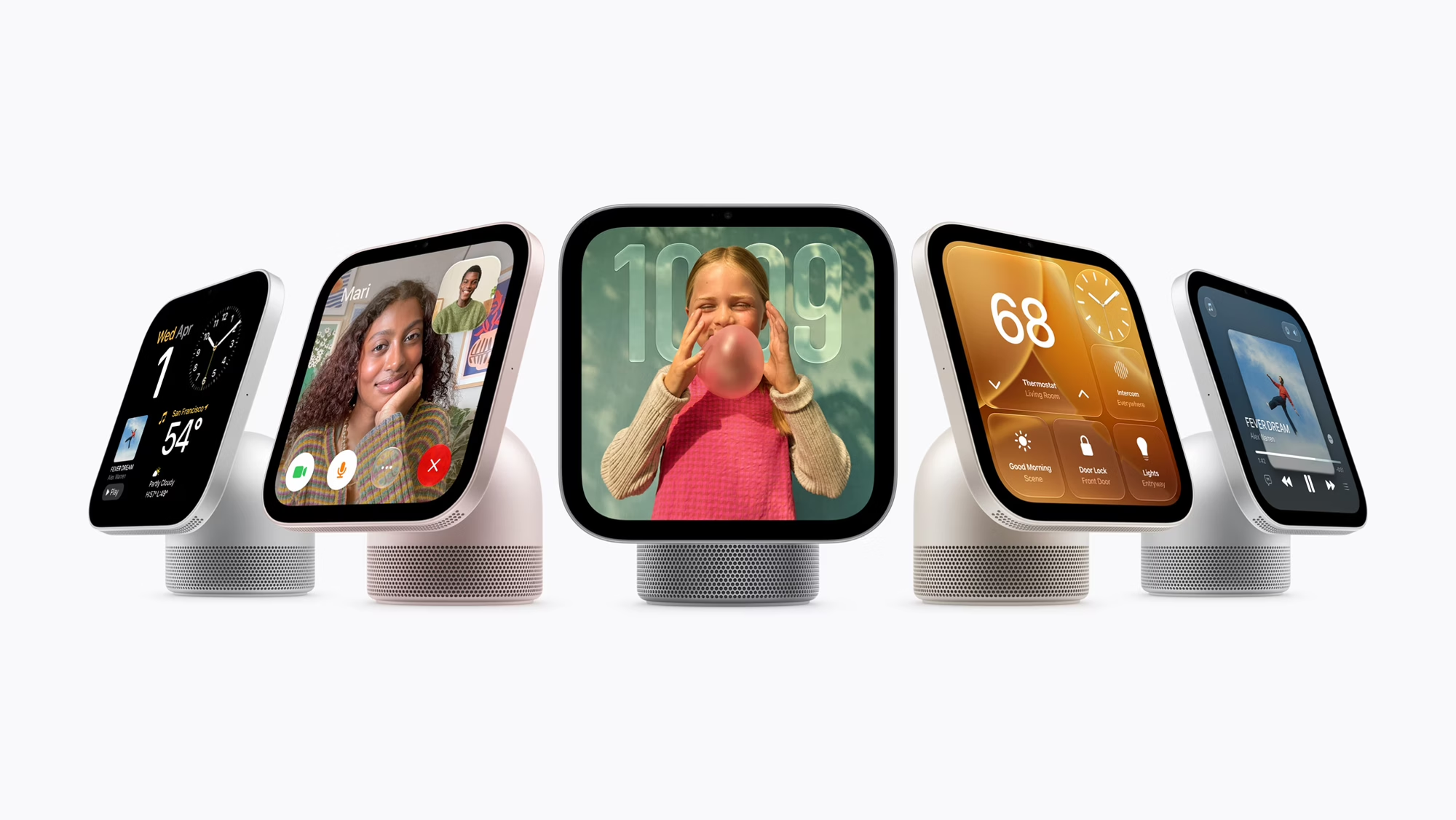
Image © Apple
First, and foremost, it won’t be available in the EU until Apple and the European Commission clarify AI-related policies. So, even if I wanted, I couldn’t buy it.
But I’m sure soon or later, this will be resolved. Would I buy it then?
For $299 it should offer something, that a cheap Android tablet running Home Assistant dashboard can’t. And honestly, I don’t know what it could be for me. (Given that my iPhone is always with me)
I already have a good sound system, so I’m not interested in another speaker. I don’t have security cameras, so I don’t need this functionality either.
What’s left is a glorified widget dashboard, which I already have set up on my iPhone and (partially) on my Apple Watch.
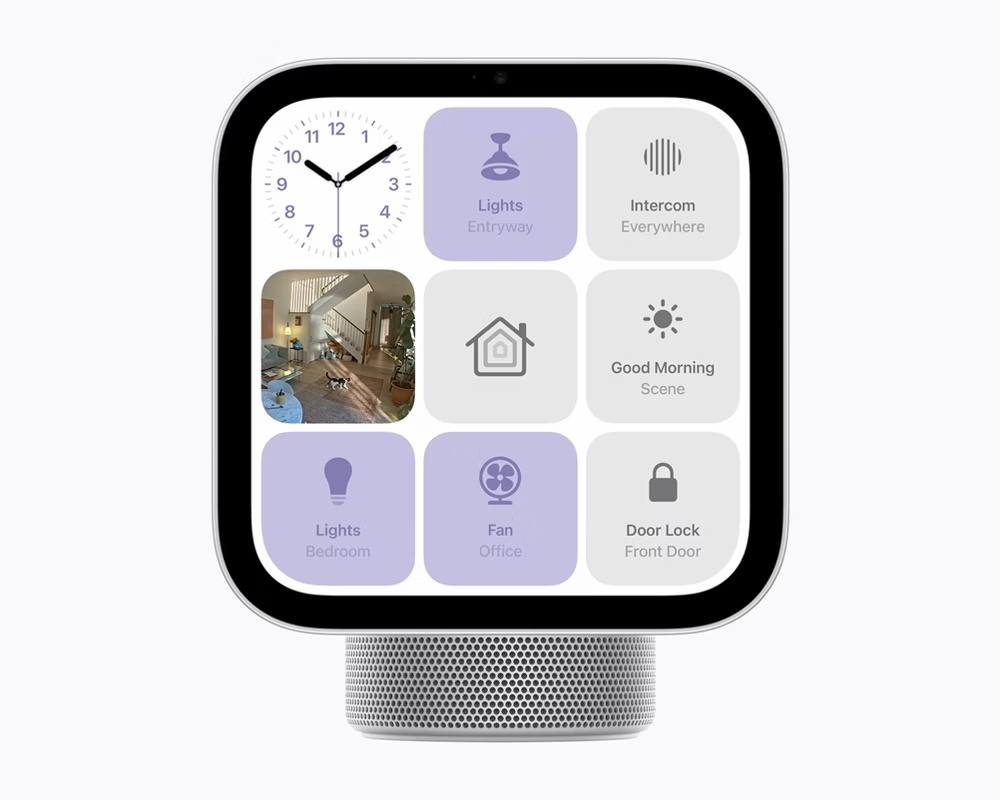
Image © Apple
I’d wish there were apps to customize the experience, but no, at least for now there is no App Store on HomeView.
Alongside the HomeView a collection of smart home accessories was announced. However, I prefer devices working on industry standards like Matter (over Thread) and Zigbee. There are good-quality ones, for a fraction of the cost of these.
And, finally, I don’t get why the wall mounted HomeView cost the same as tabletop version, and at the same time it lacks the base and charger and also requires a mount starting at $59. This makes it more expensive but less featured. How could that be?
I want to want a HomeView, but so far I don’t.
