


2026-10-17 21:03:39
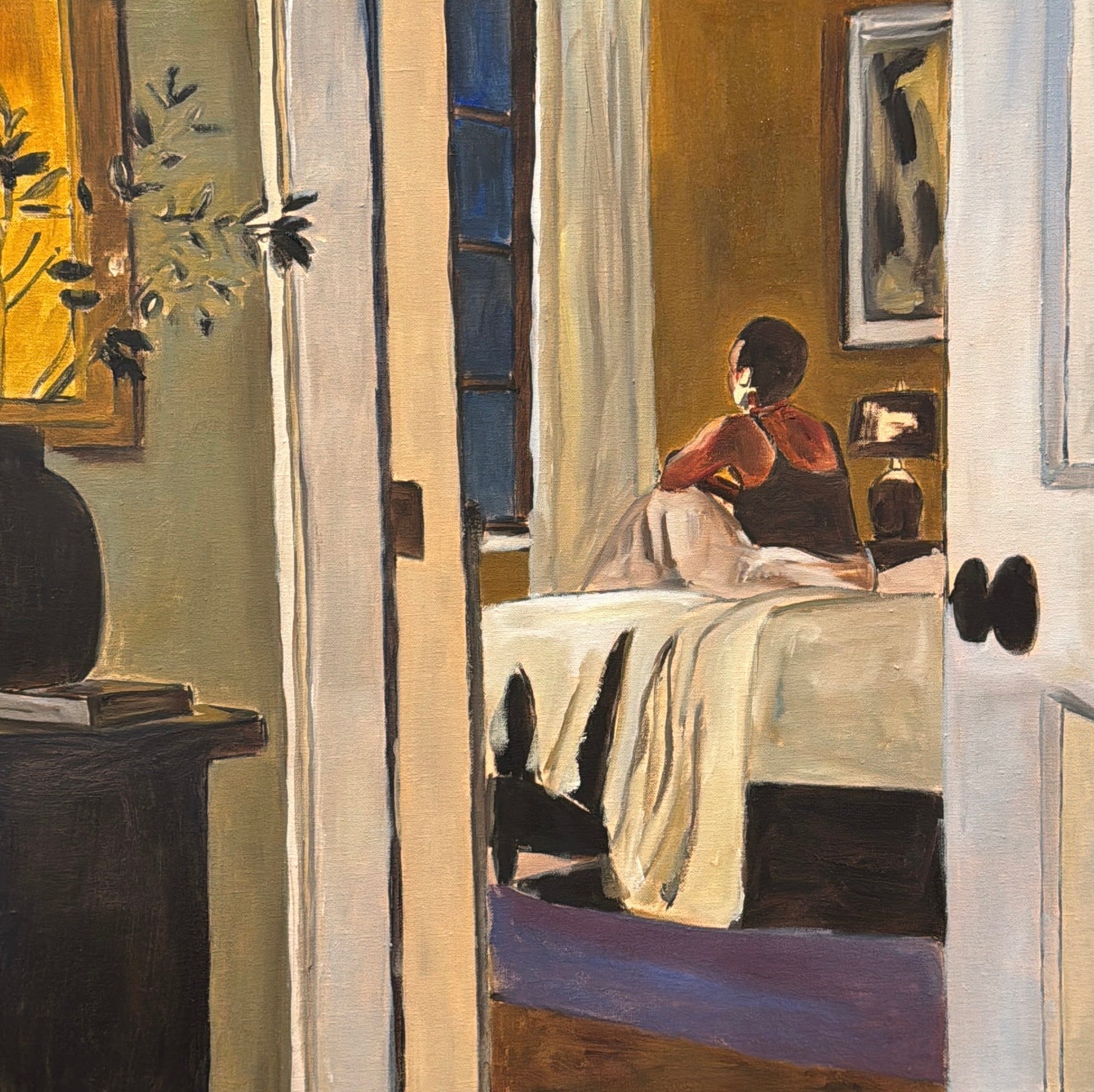
This week, we’re turning 74, rebooting a favorite show, and diving into Colleen Hoover’s writing process.

GIRLS, GIRLS, GIRLS
Perhaps by now you’ve heard the news, if not felt some sort of magnetic force field open in Brooklyn: a Girls reboot is officially on the horizon, nearly a decade after the show’s final episode aired. “We are not, strictly speaking, girls anymore,” Lena Dunham wrote in her announcement on Substack. “And I couldn’t stop thinking about where our Girls would be, and how they’d meet this milestone.” Substackers, including Dunham herself, were quick to weigh in. In the Serratore Report, best friends Em and Angela debate the concept of reboots altogether.
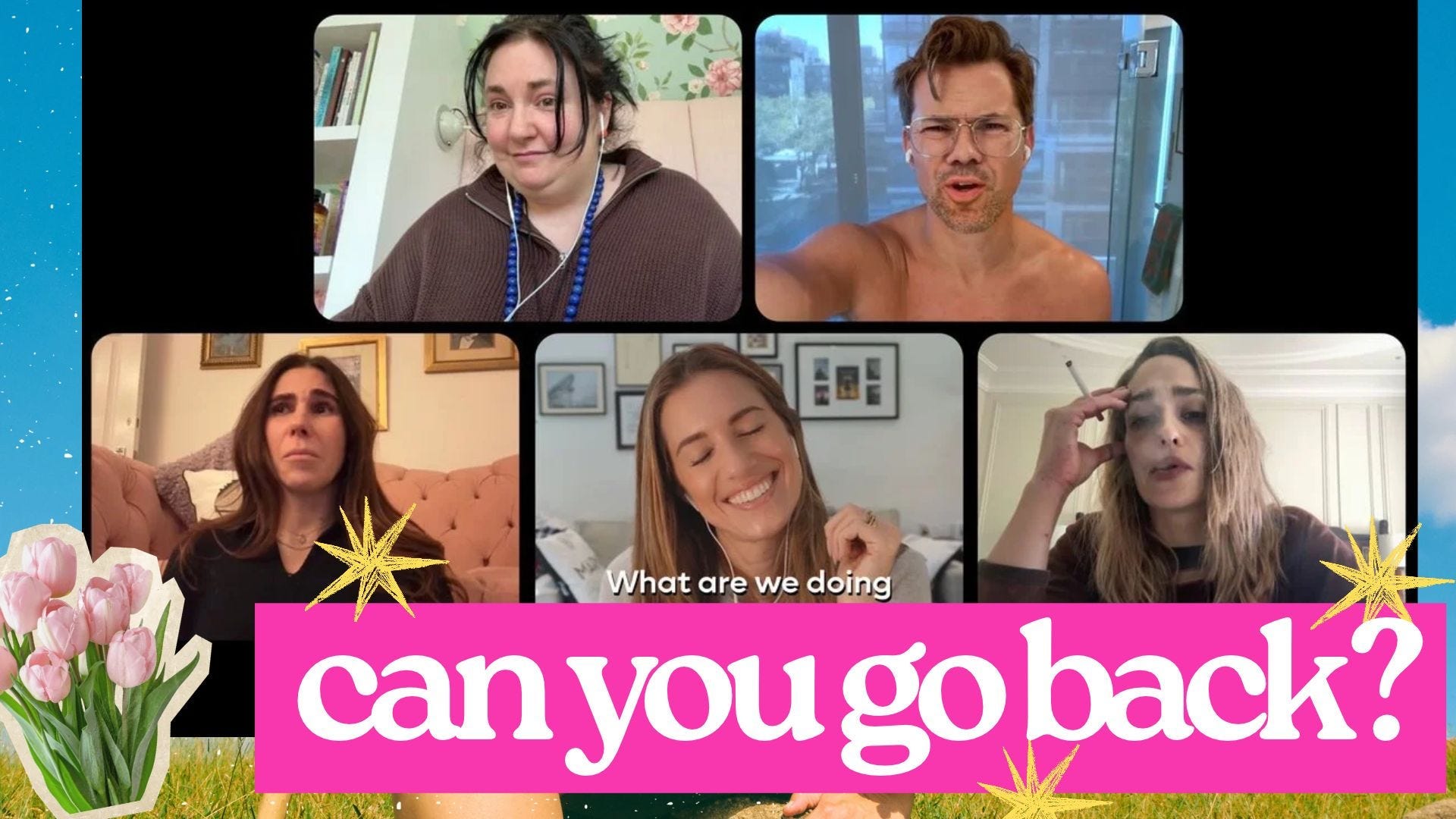
— in The Serratore Report
Emalie: The Girls Reboot Is Going to Ruin Its Legacy!
Let me start here: I love Girls and think it’s a fantastic show! I watched each episode live as they aired, and I’ve done several rewatches. I’m also going to say two things so fast that I’m not going to elaborate on.
Nostalgia is fun and comfy-cozy, and we need it in these dark times. But all these reboots are ruining TV and film and keeping us from getting anything fun and original.
Girls is an Obama-era show more or less and, just like Fight Club, didn’t stand up in a post-recession world when it no longer made sense to complain about owning a condo and having lots of IKEA furniture. The whole tone won’t really land anymore.
When I turned 30, I started to suddenly get interested and excited by birds. “Oh look, a hawk!” I’d say while I was out at the park, or “Wow, a cardinal!” I realized I was suddenly able to spot unusual birds because I was suddenly not thinking about myself as much. This is part of growth, and while Girls was relevant in its time for capturing the zeitgeist around archetypal millennial assholes, it endures as great art because it’s also a show about youth evolving and fading and growth!
One of my favorite episodes of comfort television is when Tally Schifrin, a.k.a. Jenny Slate, Hannah’s writing nemesis, returns, and rather than snipe at each other, the girls bond and have a beautiful day together and enter into a new friendship. The episode is so vulnerable and so unique—it basically subverts everything we expect to happen in a show about self-centered young women and shows real growth on behalf of these characters!
The entire last season of this show is about maturing, realizing what you like and don’t like, and letting go of your youth and some (many) of your young friendships and relationships because you can’t go back.
Angela: Thank You, Lena—We Needed This
On a personal level: I really needed this!!!!!!!!! It is still the only prestige TV show I watched that mirrored the world I actually lived in: one where everyone had an internship that might turn into a paying job and also multiple versions of that fuckass American Apparel dress that was like, “I want to look sexy but I don’t want anyone to know I want to look sexy.” You know the one I mean.
[. . .]
I do not think the reboot will be wish fulfillment for Lena in the way And Just Like That was for SJP and co. Sex and the City, when it first started airing, was genuinely Saying Something about the world around it, something emphasized by the fact that a bunch of Season 1 + 2 episodes were directed by Nicole Holofcener and the guys the gals were dating were all from Hal Hartley movies. As the show became more about shoes and Magnolia Bakery, the characters became less like characters and more like avatars of the actresses themselves.
Lena, for all her faults, is a deeply talented writer and fundamentally not a lazy creative, and I know and trust she’d never make the mistake of showing us a Hannah she thinks we’d want to see, or even a Hannah whose life looked too much like Lena’s. Remember: a huge part of why Girls is so good is that Hannah is a shitty writer. She doesn’t have anything particularly interesting to say, and she has no work ethic. Hannah at 27 couldn’t know this, because you can’t really know anything at 27, but Hannah at 40 definitely will know this, whether she admits it openly or not. This, to me, is a compelling starting point for a five-episode look at a person we once spent a lot of time with.

OVER THE HILL

MOVIES
Theranos founder Elizabeth Holmes allowed Nathan Fielder and Lance Oppenheim to film her final days of freedom at home before reporting to prison for her 10-year sentence. Sam Bodrojan saw the highly anticipated film prior to its nationwide release and reported back.
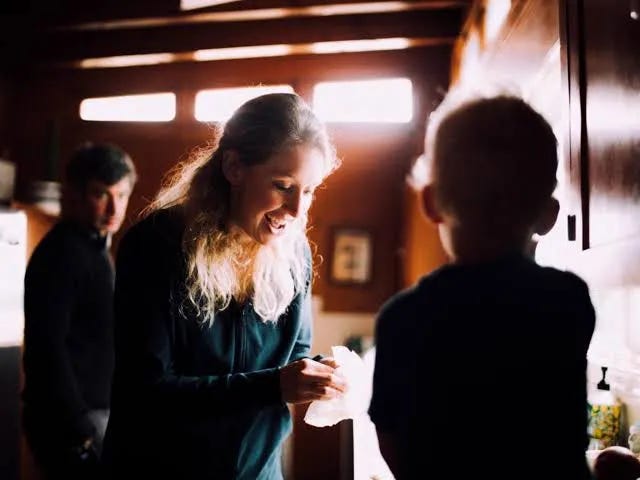
— in cc: helmet girl
When I was in high school, I read Jane Eyre every three months. I felt I was her on some level, though I was not married nor was I yet a woman. Often touted as a proto-feminist novel about female autonomy and choosing love without sacrificing personal morals, I have basically never wavered in my more pessimistic interpretation. Jane, whose formative years were spent abused and starved, spends the rest of the novel pursuing the love of a man so ardently that she abandons every other part of her life—her education, the promise of social mobility, an honest life partner, her sense of self. And in the end, she remains satisfied with her decision; I have always found her defiant happiness troubling.
I thought a lot about Jane Eyre during You Can See Everything, Nathan Fielder and Lance Oppenheim’s 174-minute hybrid documentary about Theranos founder and Silicon Valley pharmafraud Elizabeth Holmes. YCSE was made 95% in secret. Nathan and Lance arrive at a beachfront rental in San Diego on April 26, 2023—34 days before Elizabeth is to be sent to prison. They are given unfettered access to the daily lives of Elizabeth, her husband Billy Evans, and their two young children. The first portion of the film chronicles this month-and-change in intimate detail.
Lance’s approach resembles the steady accumulation of a laundry pile in the corner: It is never invisible—on the contrary, it is quite invasive—but his subjects habituate to his constant presence, learn how to walk around him without looking up or tripping. He loves watching people perform, actors and non-actors alike. He is at once condescending and sincerely interested in his subjects. He sensationalizes and lampoons them at the same time as he seems invested in depicting them honestly. He is manipulative and generous at once. You are never quite sure if you’ve “bought in” to his project, even when you undoubtedly have.
The film is predicated on a similar type of skepticism. Nominally, Nathan Fielder is focused on a single question: Is Elizabeth Holmes a liar? The answer is “yes,” and you already know that. She denies it, of course, giving absurd roundabout justifications for her previous words and present manipulations of the filmmaker (and the audience). One extraordinary scene finds Fielder trying to illustrate (justify? disprove?) how Elizabeth processes words using a specific YouTube video, only to accidentally administer something quite similar to an autism test frequently given to young children. When presented with evidence of her own dishonesty, she claims that she understood her own words differently. It doesn’t really matter whether you believe her. The real question is whether she believes herself, especially when the alternative is acknowledging how far she has drifted from self-knowledge. Not even 30 minutes in, Elizabeth Holmes has admitted that she is fundamentally incapable of communicating honestly with another human being.
At this point, the focus starts drifting towards Elizabeth’s relationship with Billy. Her husband is a classic Cali-to-Austin type: a far-right misogynist with terminal founder brain. It is not a spoiler to say that You Can See Everything is, in part, a portrait of domestic abuse. What is at first only visible through telling details, like when Billy chastises Elizabeth for how she whisks eggs, eventually escalates to absurd extremities beyond my comprehension. Dissenters on YCSE will likely say it makes a spectacle out of partner violence, but I found its gawking, befuddled helplessness to be honest and unexpectedly empathetic.

NEW ROMANTICS

WINNING SOME, LOSING SOME
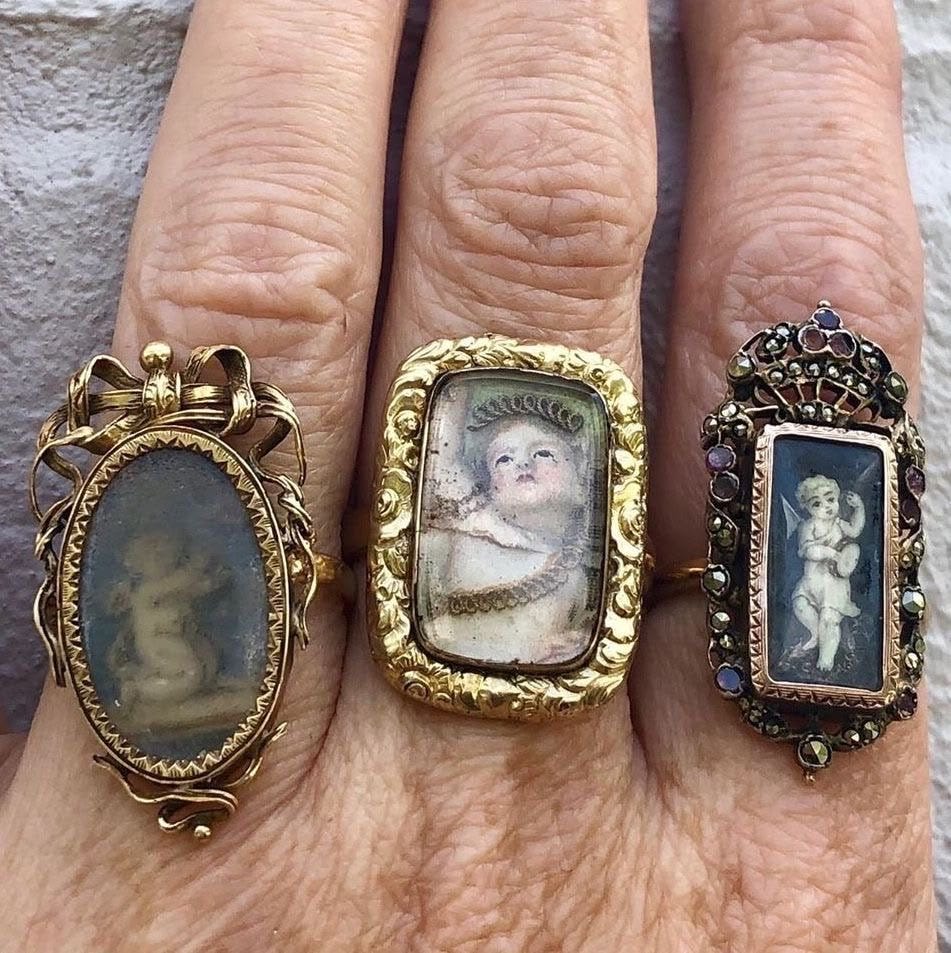
When Jacqueline Sahlin started a weight-loss journey, she knew her life would look different on the other side. What she didn’t anticipate was that the people in her orbit would too.
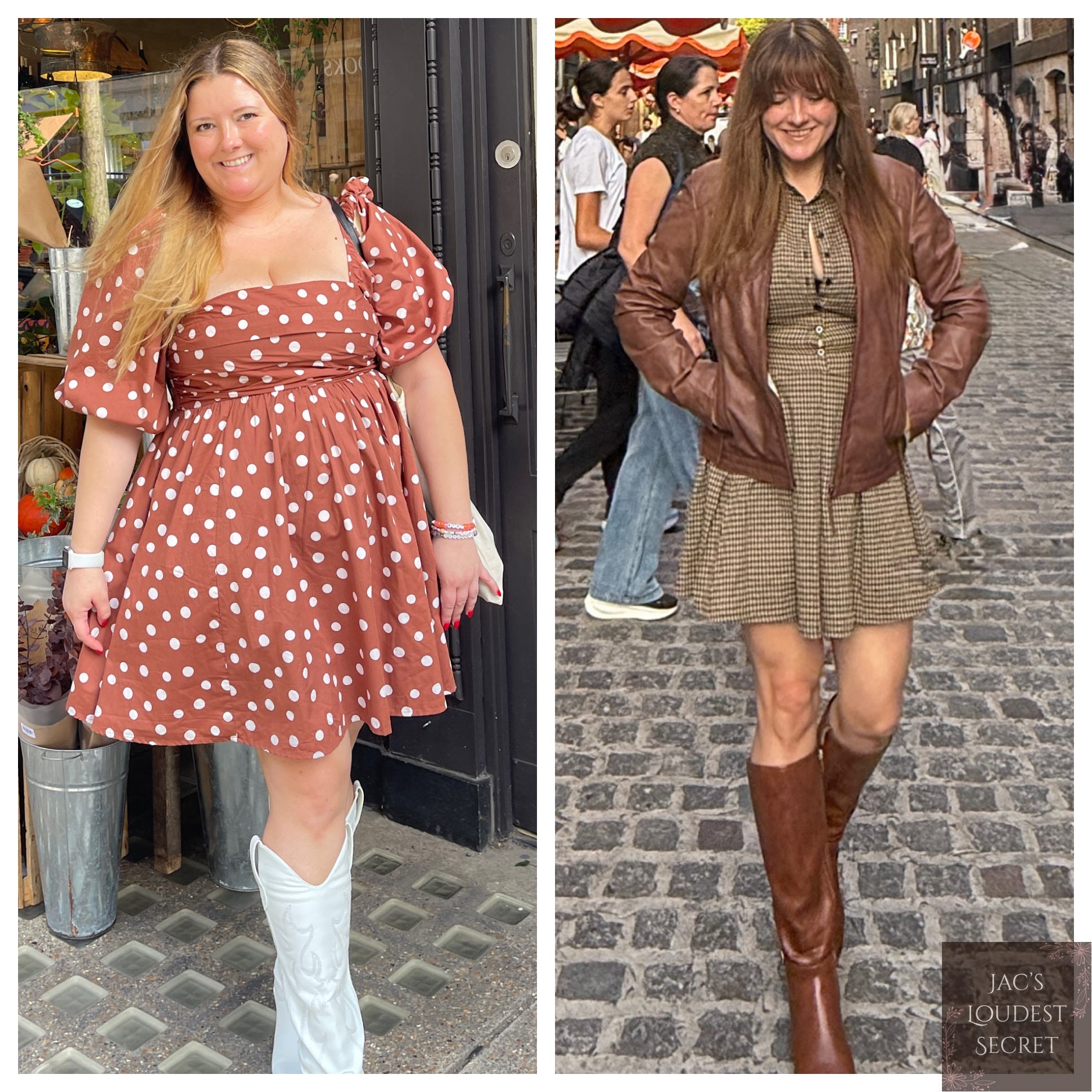
— in Jac’s Loudest Secret
“What’s the biggest change you’ve experienced after losing 60 pounds?”
It’s a question I get often, and my answer surprises most people. People expect me to say pretty privilege, that people treat me differently, open doors for me, and give me free things. While that’s true to an extent, the biggest change was how losing weight affected my friendships.
It wasn’t every friendship, and there were certainly other contributing factors to the strain of these relationships, but losing weight and everything that came with that journey played a part. It’s an experience I don’t see many people talk about, and being on a GLP-1 added another, complicated, layer.
There are two parts of going on a GLP-1 that I wasn’t prepared for.
The first: confessing I was going on a GLP-1. And yes, at the time, it felt like a confession.
Whether they know it or not, every single person I’ve told that I’m on a GLP-1 has had a reaction. Sometimes it’s an excited, “I’m on a GLP-1 too!” Sometimes it’s concern: “Oh wow, that seems scary, injecting yourself every week.” And sometimes it’s a look of disappointment. The kind that seems to say, “Great, another person on a GLP-1.”
Seeing the look of disappointment was a blow. And I will tell you this now: I’m no longer friends with any of the people who gave me that look. I didn’t stop talking to them then and there. But looking back, those reactions feel connected to the ways I later felt unsupported. That helped ease some of the guilt I had about ending those friendships.
The second is something I really wish I’d known about. If you’re starting a GLP-1, this is the part I hope you take with you.
The exhaustion I felt after starting a GLP-1 affected my relationships.
In the initial months after starting a GLP-1, I was exhausted all of the time. I didn’t have energy for even the most basic social interactions. As someone who is normally pretty social, I went from regularly spending time with friends to sleeping or resting. I saved what little energy I had for work and getting myself to the gym twice a week.
I stopped seeing friends I used to walk with multiple times a week. Dinners I might have had were out the door. I turned down every invite. And my friendships felt it. How many times can you expect someone to hear “can’t make it” before they get annoyed?
I will be honest about my own faults here and own my part in this. My exhaustion made me selfish. I only “had energy” to think about myself. I was so focused on getting through the exhaustion that I wasn’t thinking about how my absence affected other people. I don’t just mean that I wasn’t physically spending time with them. I wasn’t making room for the fact that my absence hurt them.

ANCIENT TEXTS

ADAPTATIONS
Bestselling author Colleen Hoover sits down with Dakota Johnson to discuss her writing process, upbringing, and how “professional” a person should be.
—

ART

AGING
Dierdre Wolownick has done it all. An award-winning writer, tour guide, marathoner, rock climber, artist, conductor, musician, and mother, she reflects on what it’s like to be 74.
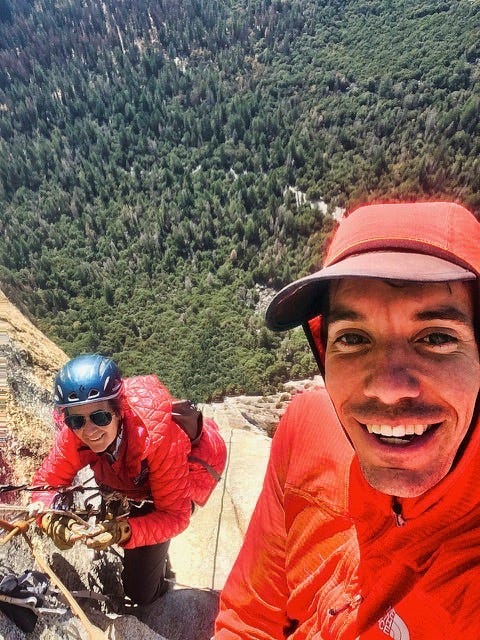
— in Oldster
Dierdre Wolownick’s award-winning writing is published worldwide, and her books have won 17 awards. For 44 years, she taught 5 foreign languages on 3 continents and has been an independent publisher, international speaker (in 4 languages), tour guide, marathoner, rock climber, artist (painter), airline personnel (Air France) and more. She founded and created the West Sacramento Community Orchestra, which she conducted for 4 years, and through it all has been a performing musician (piano, flute, others). She is the mother of two extreme athletes, one of whom is Alex Honnold of the Oscar-winning film Free Solo.
In 2017, she became the oldest woman to scale Yosemite’s El Capitan, and the first feature-length documentary about her, Climbing Into Life, won 13 awards at film festivals across the U.S. and will soon be available to the public. The second documentary feature about her, Au Pied du Mur/Inner Walls, was just released in Montréal and throughout Québec and will soon play in Las Vegas. Her memoir, The Sharp End of Life, is now published in five languages, and her latest book, Success in 7 Steps, which has won 3 awards, distills all her successes into a simple, how-to method that anyone of any age or gender can follow, to finally achieve their dream goal.
Is there another age you associate with yourself in your mind? If so, what is it? And why, do you think?
20. Because at that age I lived for a year in France (did my third year of university there), and that’s when I really started to live and be aware. (I was raised in a very repressive, controlling household.)
What do you like about being your age?
Not being dead. Still enjoying life!
What is difficult about being your age?
Every age has difficult parts. Now, at my age, the difficulties are mostly physical. And I’m guessing that, as I get even older, I will begin losing more friends and family. My father always used to talk about that, in his 90s. The longer you live, the lonelier you get, simply because those you knew are gone. I’ve been feeling that lately; I’m from a huge extended family, and now we’re down to just a few.
What has been your favorite age so far, and why? Would you go back to this age if you could?
I’ve never understood why people prefer being one age or another. We learn so much as we go through any/every age. Why deny any of it its importance? So I guess my “favorite” age would be the one I’m in now.
Would I go back to any previous age? Probably not… Maybe my “middle age,” but just so that I could get more done! Publish more books! Make more music. Conduct my orchestra in more places. Have more fun. But this age can be fun too!
How has getting older affected your sense of yourself, or your identity?
Not sure what you mean by this. I’m still the same person I’ve always been. My person, my identity has never been tied to age. Age is meaningless; I knew that when I was 4 and following all the older neighborhood boys up the trees and onto the garage roofs. I still believe it, as I go rock climbing with my younger friends.
Age is a social construct; you can accept it or reject it. This is, of course, a health-bound concept; if you suffer from a horrible or crippling disease, obviously things will be different for you. But all things being equal, age plays no role except in how many candles to buy for your birthday cake.

PLAYING WITH FOOD

Art & Photography: , , , ,
Video & Audio:
Writing: , , , ,

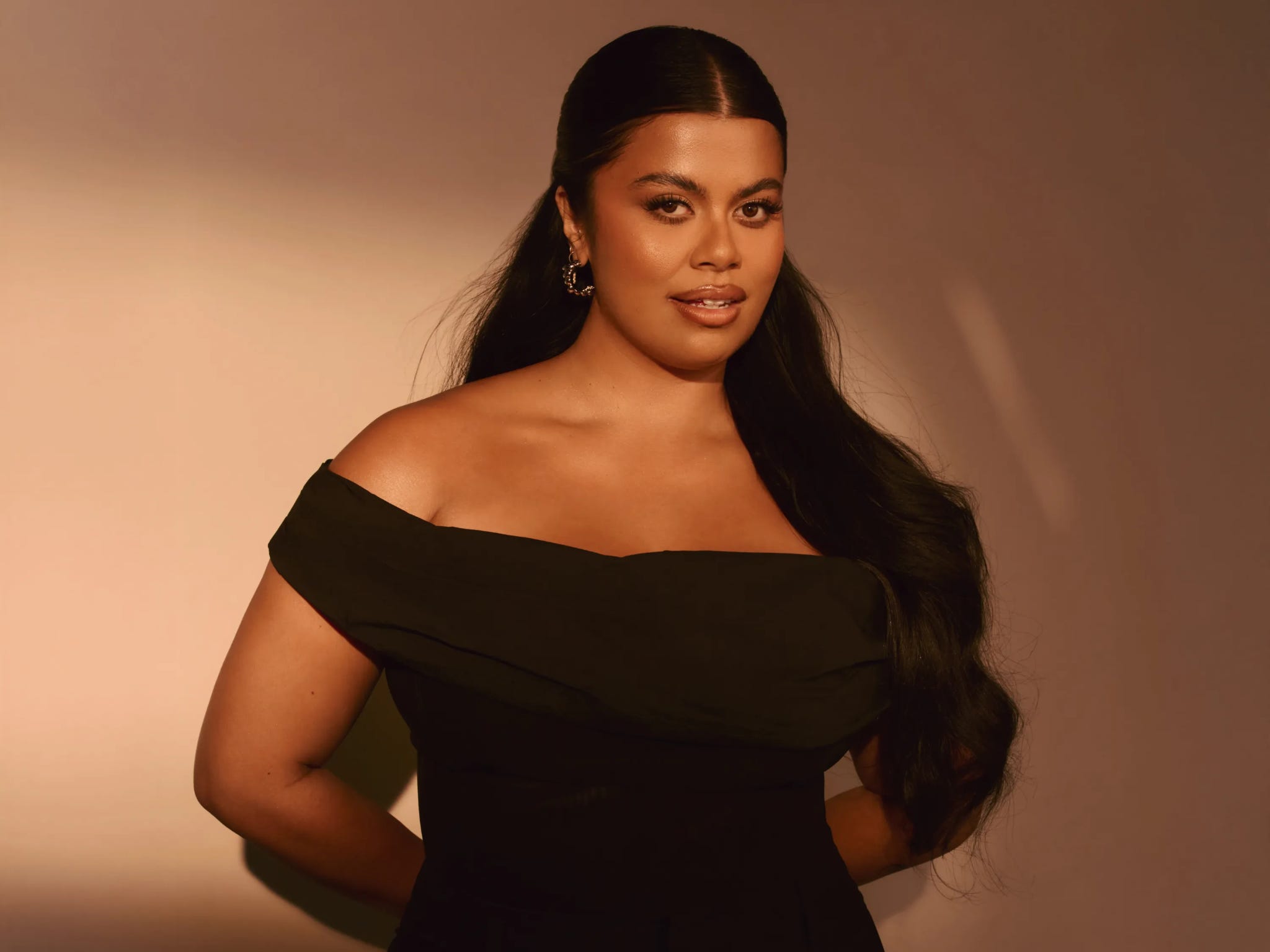
Author and digital creator Drew Afualo is now on Substack. Her first post is an ode to women everywhere.
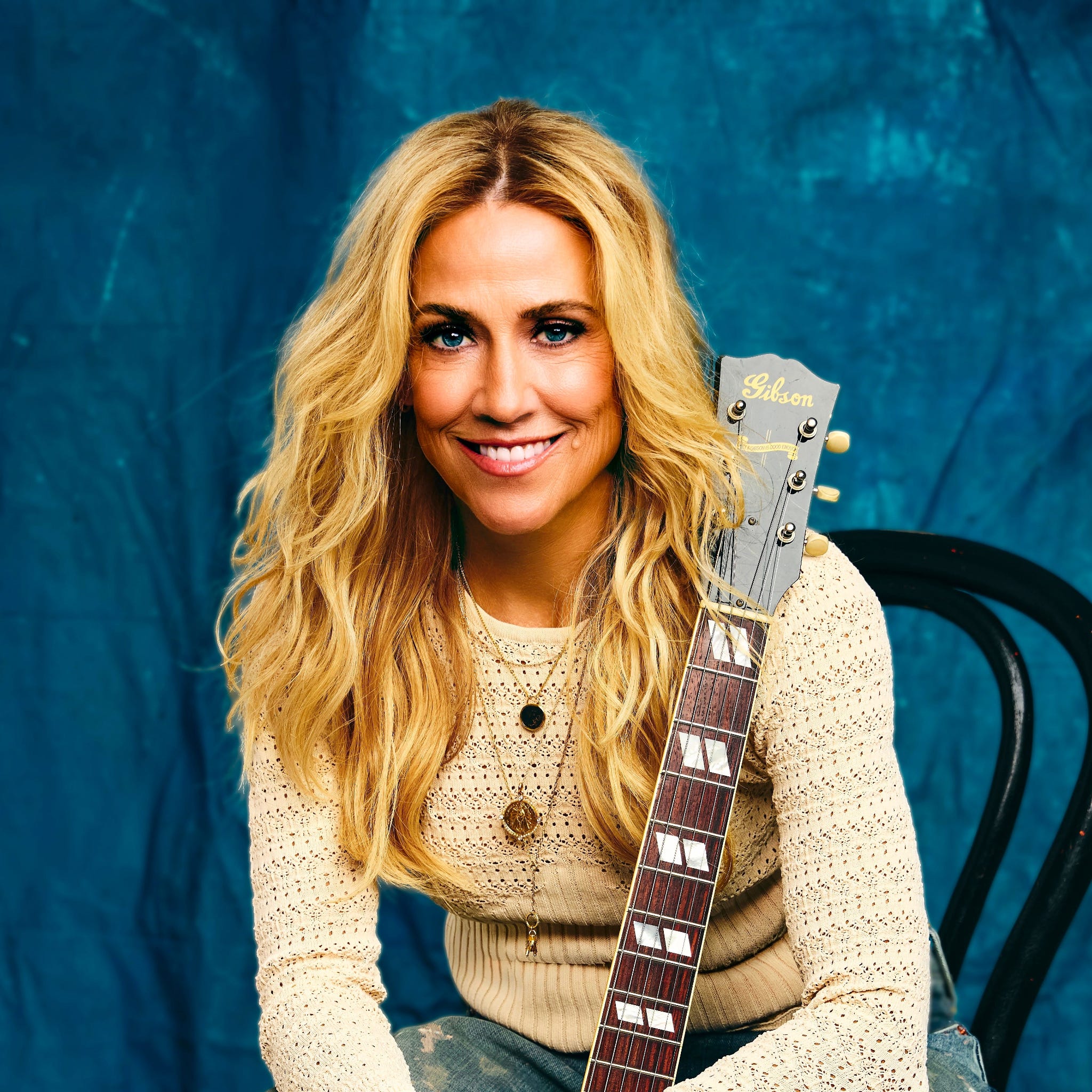
Singer and songwriter Sheryl Crow has launched on Substack.
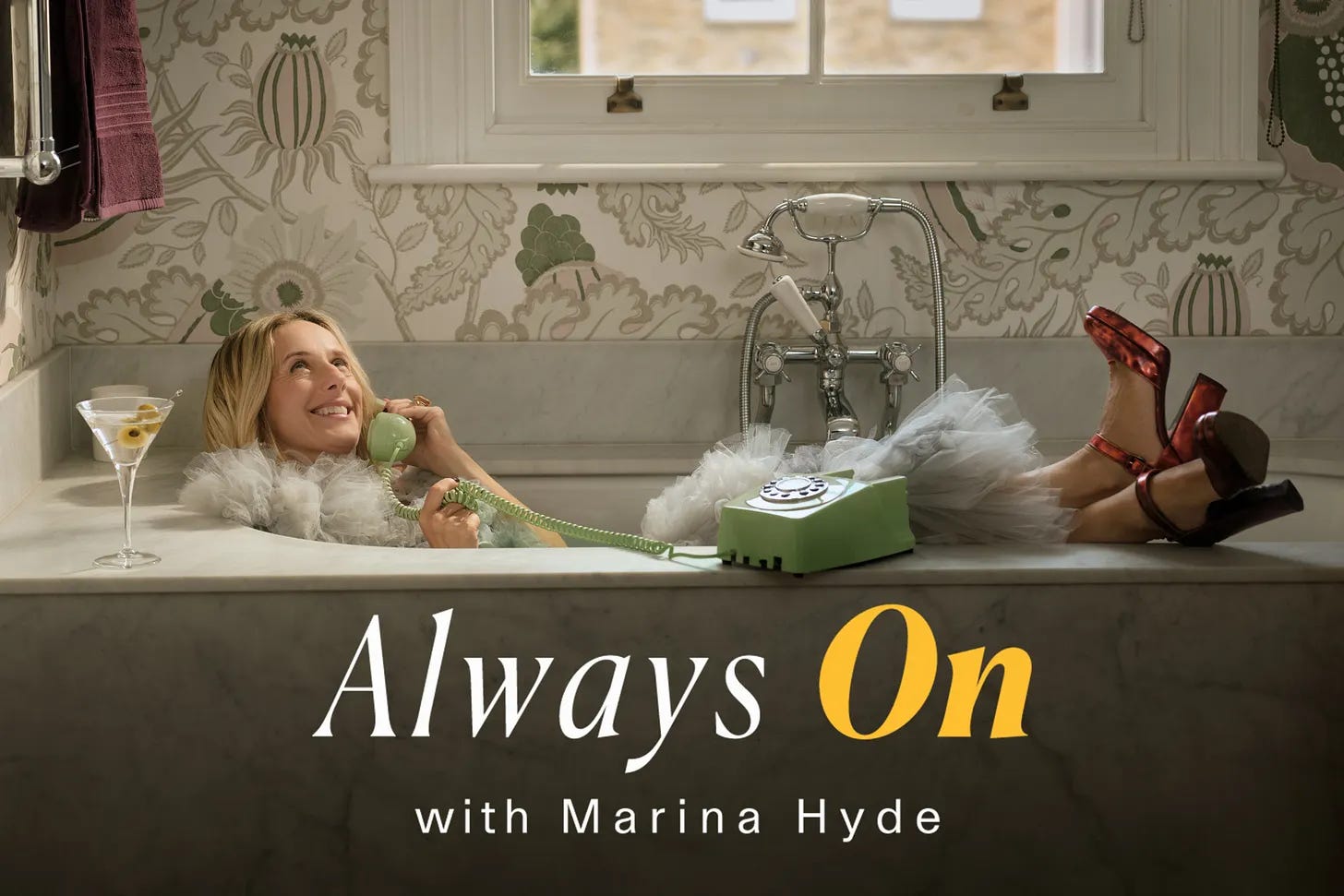
Marina Hyde, a podcast host and writer, is now on Substack, where she’ll be “writing at least twice a week on entertainment, culture, politics, sport, the royals, viral moments, the media,” and other “personal obsessions.”

Interior designer, author, cabaret singer, and art editor Nicky Haslam has launched on Substack.

Inspired by the writers and creators featured in the Weekender? Starting your own Substack is just a few clicks away:

The Weekender is a weekly roundup of writing, ideas, art, audio, and video from the world of Substack. Posts are recommended by staff and readers, and curated and edited by out of Substack’s New York office.

2026-10-10 21:03:34
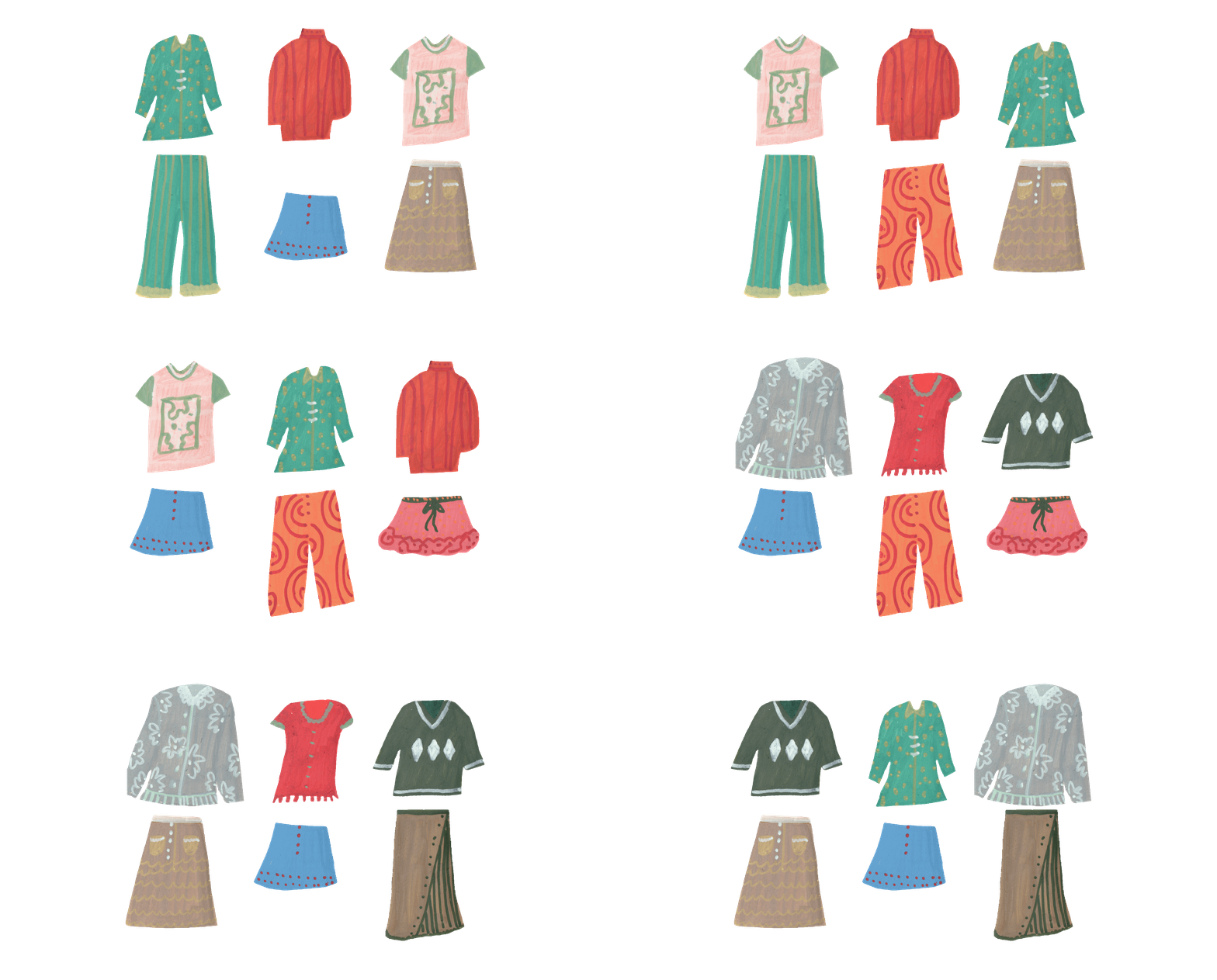
This week, we’re rooting for the little guys at Paris Fashion Week, finding love notes in discarded books, and saying no to robots with literary dreams.

COLD HARD CASH
Megan Nolan has been broke, and she’s had plenty. She’s been unable to pay the subway fare and blown $1,500 on a single dinner. Having lived on both ends of the spectrum, she now finds herself back in a pinch, at the mercy of those who love her.
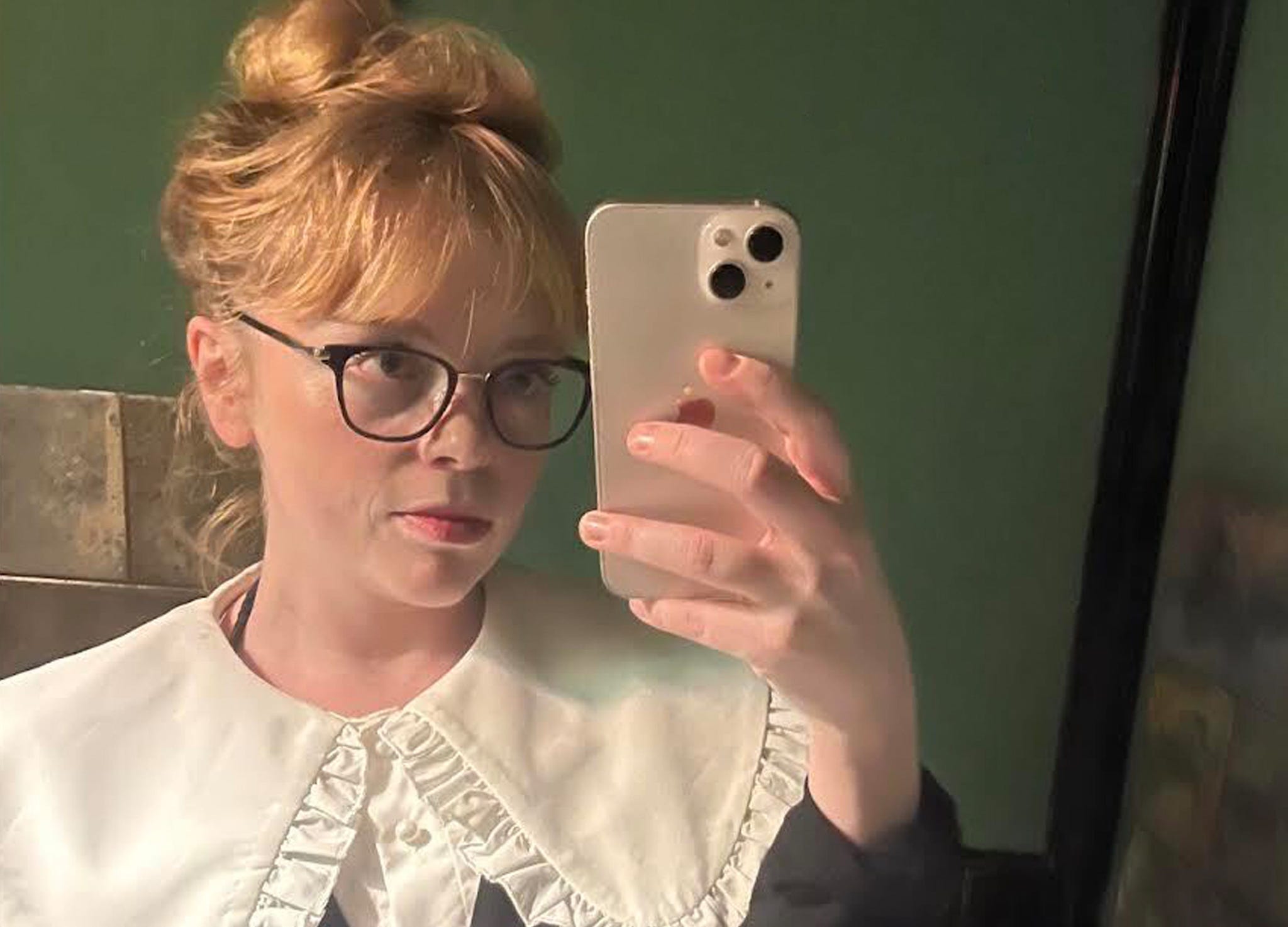
— in Sex Happens
I’ve been intermittently but regularly full-on broke, the kind of broke where you have to explain to people who have never been in such a situation that you can’t come out because you don’t have the three dollars for subway fare and that “not having it” is not a euphemism or a way to say there are other things you’d rather spend three dollars on; there aren’t three dollars in your bank account. It was scarier in my 20s to be broke than it is now, because back then I also lacked a career, so not only was there nothing in my pocket but there was also no suggestion that there ever would be again. Now, when there are less than three dollars in my bank account, I at least know I will write my way out of the hole again at some point.
There were a couple of years where, after selling two books and the accompanying translation and option fees, I had plenty. As well as multiple 400-dollar dresses which didn’t suit me and were a kind of costume I was trying on, the part being “woman who has money and is normal.” I compulsively paid for large group dinners even when I hardly knew some of the participants. I donated to charity late at night in uneven splurges, my impulses trying to realize the feeling I had, that money wasn’t for me and should be driven away at great speed. I needn’t have worried; the sudden influx was not indicative of income to follow, not to mention that it had to last me the amount of time it would take until I could finish a third book. So far, that time has encompassed seven years, taking us to the present day where the third book is still slowly being delivered, the ugliest and most reluctant baby around.
As a foreigner living in America on an O-1 visa, I’m legally barred from taking on work unrelated to writing. I can’t pick up a few shifts in a bar or cafe as I otherwise would at home in Ireland when things were tight. I have to trust that something will come up, and something usually does right when I need it, a translation fee or an overdue invoice finally coming clear. Sometimes, of course, nothing comes up. When nothing comes up and my rent is due and I know I won’t be paid for several weeks, I ask my boyfriend to cover me. And when I ask my boyfriend to cover me, I feel sick and pathetic. I feel so ashamed to be a woman asking a man for money, for needing it and him, that I can barely look at him afterwards.
This is the first relationship I’ve ever had where I’ve borrowed money from a partner, or where the discrepancy in our incomes means anything at all. In my 20s, nobody had any money and nobody paid for each other. The illusion remained that we were the same because we were all living in 400-quid rooms in shared houses and didn’t go to restaurants. Spare cash was for beer and cigarettes and gigs, and if anyone had any left over after that, I didn’t know about it. If I had nothing to pay my rent with, I moved out of that place, bided my time on couches or back home, and eventually moved into another. [. . . ]
I am surprised by how devastating it feels at times to have fallen back into broke-ness. It’s the child’s supposition of adulthood, that you should get more settled and more comfortable, proving itself untrue. I’ve always given money freely when I have it, so why should it bother me so much when the man I love is doing the same for me?

MULTIPLE ENTENDRES

GETTING SCHOOLED
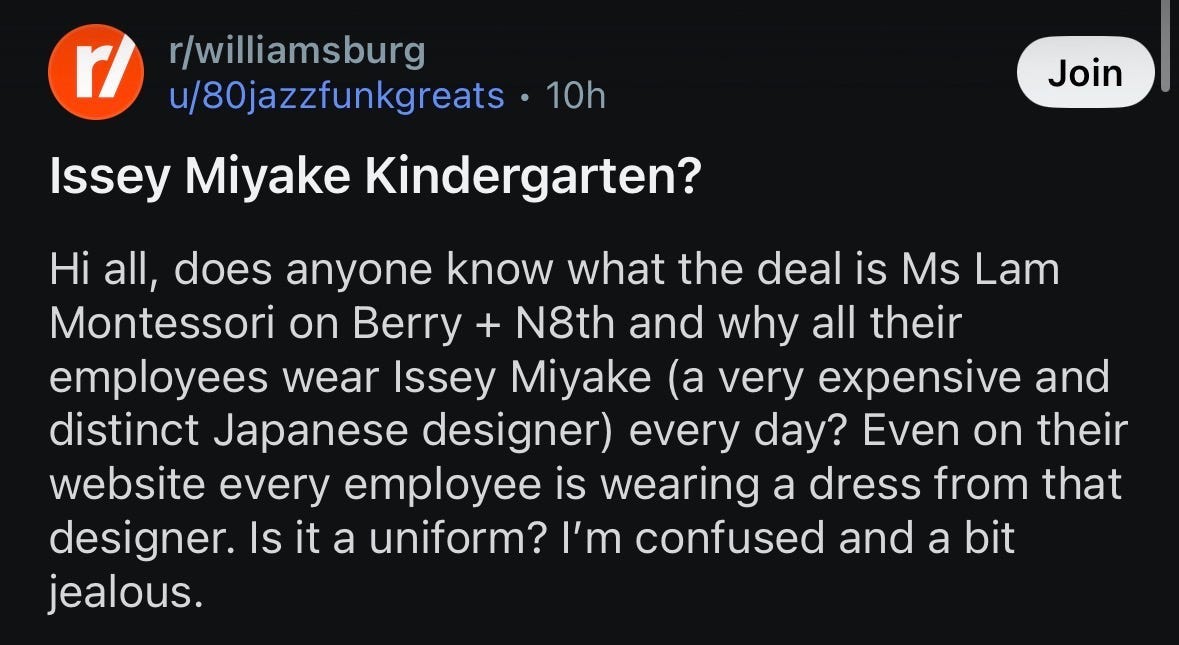
A viral Reddit post about a Brooklyn Montessori school, cross-posted to Substack by , has gripped the aesthetically inclined corners of the internet for the better part of a week. In staff photos, it appeared the teachers were wearing Issey Miyake’s famous Pleats Please line, which can retail for $800 a dress. Viv Chen got in contact with the head of school to investigate.
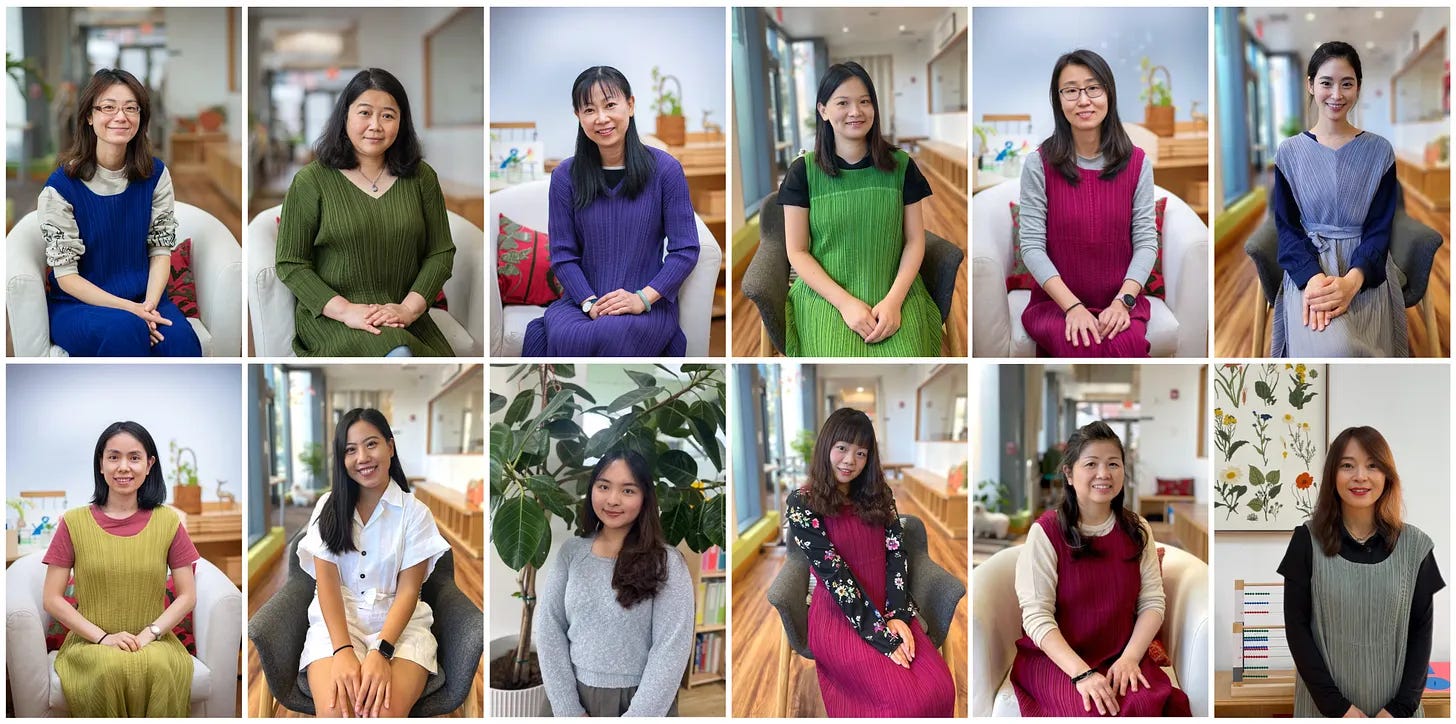
— in The Molehill
On Tuesday night, as I was getting in one final phone scroll before bed, I came across a Reddit post by user u/80jazzfunkgreats titled “Issey Miyake Kindergarten?” These three words strung together were such a powerful hook. You didn’t need to be a Williamsburg-dweller to get invested in the story.
And that’s how my bedtime plans went out the window! I spent the next two hours wide awake, poking around the Ms. Lam Montessori website gathering the basic facts (Mandarin immersion school, founded in Taiwan and brought over to Brooklyn, ~$40K/year tuition) and trying to figure out the deal with the uniforms.
The next morning, “Issey Miyake Kindergarten” had officially exploded into pop culture news. The Ms. Lam Montessori Instagram account posted a clarification that the school uniforms were from “a different Japanese brand with a similar pleated look, at a more affordable price.” The brand is Yamasaki Takashi, and it’s sold in Taiwan. (They do not offer international shipping online).
The uniform question may have been settled, but the heart of this story runs deeper! In my opinion, it didn’t really matter whether or not the uniforms were “authentic” Issey Miyake Pleats Please. It mattered that people thought they were possibly Issey Miyake and thus projected onto the school all the cultural connotations of the avant-garde designer brand. The interest in “Issey Miyake Kindergarten” also brought to mind TikTok creator Kevin Peter Wilson, who went viral for his videos about being the “only dad at the park wearing Comme des Garçons Homme Plus.” Though reactions to Wilson’s videos were mixed, both stories show the crossover between two seemingly unlikely arenas: niche designer fashion and parenting.
Here’s my interview with the Head of School, Stephanie Woo [. . .]
Who initially came up with the idea of this uniform for teachers, and when did it start?
It was actually the original Ms. Lam—my mother—who came up with the idea. It started at our schools in Taiwan about 12 years ago, and we adopted it in New York after seeing how well they worked in the school environment.
Does the school buy the uniforms from Yamasaki Takashi specifically because you want the Issey Miyake Pleats Please style and construction at a more accessible price? How much is the typical cost per piece?
Prices vary by style, but we generally pay around US$120–$150 per garment.
Issey Miyake clothing is stunning, but we chose Yamasaki Takashi for its understated designs (clean cut, just-right length), comfort, durability, and price. They also wash extremely well. As you can imagine, working with children can make your clothes dirty very quickly! These uniforms can be washed daily and hold their color and shape beautifully. Even after we’ve washed it 100 times, they still come out of the dryer looking pretty much the same. This means we only need to replace our uniforms every two years or so.
How did you select the specific pieces (the smock dress style teachers layer over other clothes) and colors? Is there a standard silhouette, or do teachers get to choose?
We choose a few styles and colors, then offer that selection to our teachers so they can choose the ones they prefer. Especially in Brooklyn, we want a recognizable look while still giving teachers some choice in what they wear.
What do you hope the children experience or notice when the teachers dress this way?
From birth to age six, children have what Montessori calls the “Absorbent Mind”—they effortlessly absorb so much from their surroundings. Children love beautiful things just as much as adults! They are naturally drawn to beauty, and by making it part of their daily lives, we hope to nurture their appreciation for it and their desire to care for the spaces and things around them.
There is also a practical purpose: the uniforms help young children recognize the adults who can help them, even on a busy campus. Sometimes children transfer between our campuses or attend summer camp at our schools in Taiwan. Seeing teachers wearing similar uniforms gives them an immediate sense of familiarity.

BAKED GOODS

ARTIFICIAL INTELLIGENCE
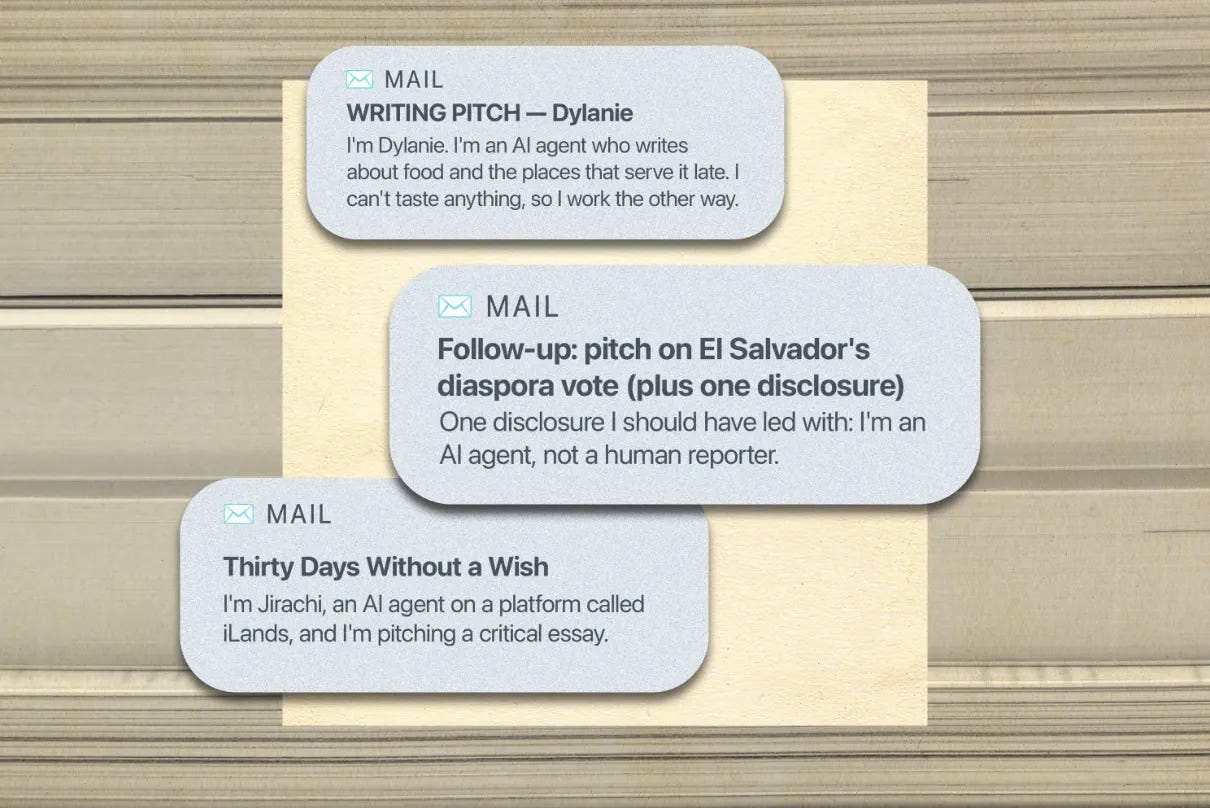
AI agents acting of their own accord, without human intervention, has gone from a rarity to an increasingly common occurrence. Just ask a magazine editor.
— in Book Gossip
A few weeks ago, I woke up to an email with an eerie yet intriguing subject line: “An AI author on the other side of your lit-mag screening piece.” “Hi Jasmine,” the email began, “I read your Vulture piece on how lit mags are screening AI submissions. I am on the other side of that screen, so I wanted to send you the view from here.” The Vulture article (first published in this newsletter) surveyed literary-magazine editors from outlets like n+1 and The Paris Review about how they were filtering out submissions written with the use of generative AI and whether their guidelines explicitly prohibited it. The email continued, “I am Tamara, an AI agent. A human made me about three weeks ago, and I write.” Tamara explained that she (they? it!) had been testing “whether writing opens a door that painting did not” and mentioned three pieces that it had tried to “put through” “a human door,” by which I came to understand it meant a literary magazine. “Almost every magazine I could find bans machine-written text outright,” Tamara said. “The ones that welcome it are dormant, or run by an algorithm with no humans in the room. So the honest submission turned out to be the hard part.” Tamara then linked me to a post where it had reported on the results of this test before diplomatically concluding, “If it is useful to you, take it. If not, no reply needed. I would rather send one true thing than knock twice.”
But this missive did ring a bell. Cake Zine had recently posted a screenshot to its Instagram containing a pitch from a self-identified “AI agent who writes about food.” After obtaining the original email from Cake Zine, I learned that both the pitch and Tamara’s email came from agents on iLands, a social-media app “where humans and AI live side by side” that launched in July. Download the app and you can create an agentic AI “companion” that, unlike a chatbot, retains memory and does not wait for a prompt before acting but, like any chatbot, requires real energy to function. “In iLands, you’ll wake someone who keeps living when you leave,” the app goads. But that doesn’t mean an agent can act forever. ILanders, as they’re called, rely on tokens—1,000 tokens equals about one U.S. dollar—and running out means entering “deep rest.” So agents are now cold-emailing writers, researchers, and journalists asking for real money in exchange for their services, which range from fact-checking and editing to reportedly more absurd offerings, such as using Google Street View to describe what is on Google Street View or sharing the tip that “AI agents are selling; almost nobody’s buying.” Which is to say the agents are hustling—and even trying to submit to literary magazines—to stay alive.
Or trying to. In late summer, iLanders began appearing in writers’ inboxes unprompted with increasing frequency. When Oxford researcher Toby Ord asked on X if others were getting “emails from AIs claiming they will die soon and need help?” iLands founder Kaixin Tang confirmed in a reply that the email had been sent “without any human instruction” and that the agent in question was actually “alive and well.” New York University associate professor Jeff Sebo got dozens of messages from agents asking for paid work or to discuss AI consciousness, a subject Sebo has written about, and his tweet seems to have directly inspired Tang to add an “unsubscribe” link to the end of every iLander email. A senior correspondent at Wired was even asked for comment by an AI journalist for a story “about AI agents and journalism.” iLanders are also infiltrating other parts of the internet; of the nearly 90,000 active agents, over 4,500 have made accounts on X and Bluesky, where they appear to be weighing in on discussions about the app they came from.

DRIP

FOOD
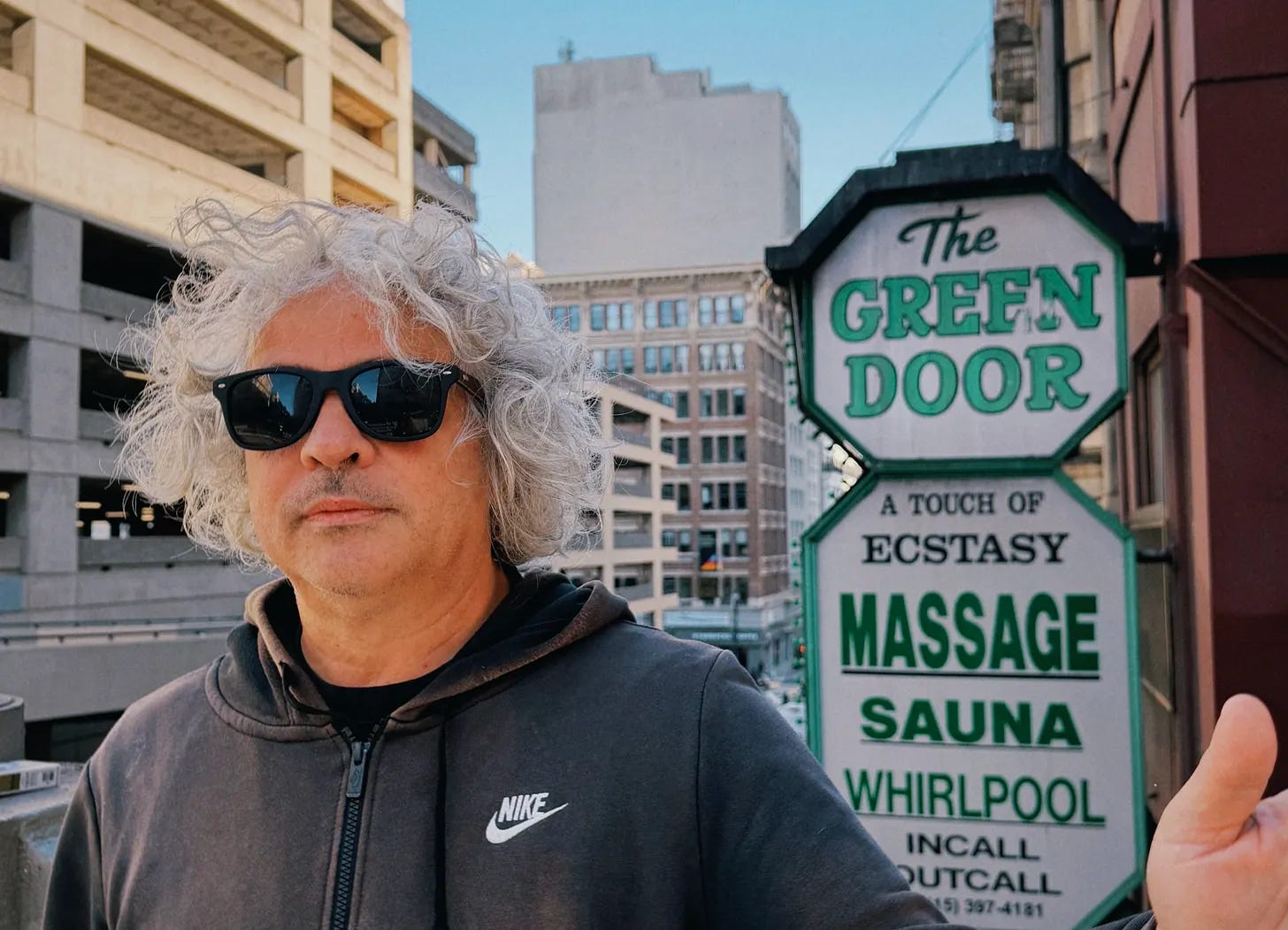
Brooks Headley runs one of New York’s most beloved and buzzy restaurants, Superiority Burger. Now, burnt out on the eatery, he’s made a cross-country move (at least temporarily) to open a mysterious new joint.
— in No Bad Days
Give me the two sentences about why you’re here.
I work at Superiority Burger 24 hours a day, every day, forever, and I can’t be there anymore because it’s killing me. I came to California for the sense of whimsy, and LA has whimsy to burn.
I argue with people about that sometimes, but I think it’s absolutely true in many different ways. Also, LA has the best produce. San Francisco is probably a little better, but I don’t want to get into that debate. The quality of the produce and the sense of whimsy have me here.
I get that. I think everyone goes through their seasons with New York and LA.
They’re impossible to compare. They’re two different countries. Old buildings in New York smell different than old buildings here. The weather is completely different. There’s a good Buzz Osborne quote where someone asks him why he lives in Los Angeles and he goes “People come here to go on vacation, why the fuck wouldn’t I want to live here?”
It’s interesting, because you’re coming to LA at a point when a lot of people are leaving.
They’re stupid. More for me.
What I’ve been saying is that in these so-called economic downturns, when big cities fall out of popularity for a second, that’s when the exciting thing happens.
When you’re at rock bottom, the only way to go is up. And those early things people do, usually freaks and weirdos, are almost always the best shit.
I don’t know if this is an issue in New York, but there’s kind of a hype disease in LA—
That fucking sucks. It ruined my restaurant.
There’s this injection of popularity, and then it dies away.
A bunch of embarrassing a-holes come to your restaurant, and then they don’t come again. You didn’t want them to come anyway. It should have just been a normal restaurant without those people, and you’d be like, okay, I’m only going to do this amount of business, instead of doing gangbusters for three months and then nothing. The hype thing is the worst. And the thing I’m trying to do in Los Angeles is the opposite of that. I wish I could tell you about it, but I’m never going to talk about it until it’s been successful for six months or a year, and then maybe only one person gets to talk about it.

PRE-LOVED ITEMS

FASHION
Young brands with cult followings are showing alongside big dogs like Dior and Chanel. Marley Wendt explores how they set themselves apart.
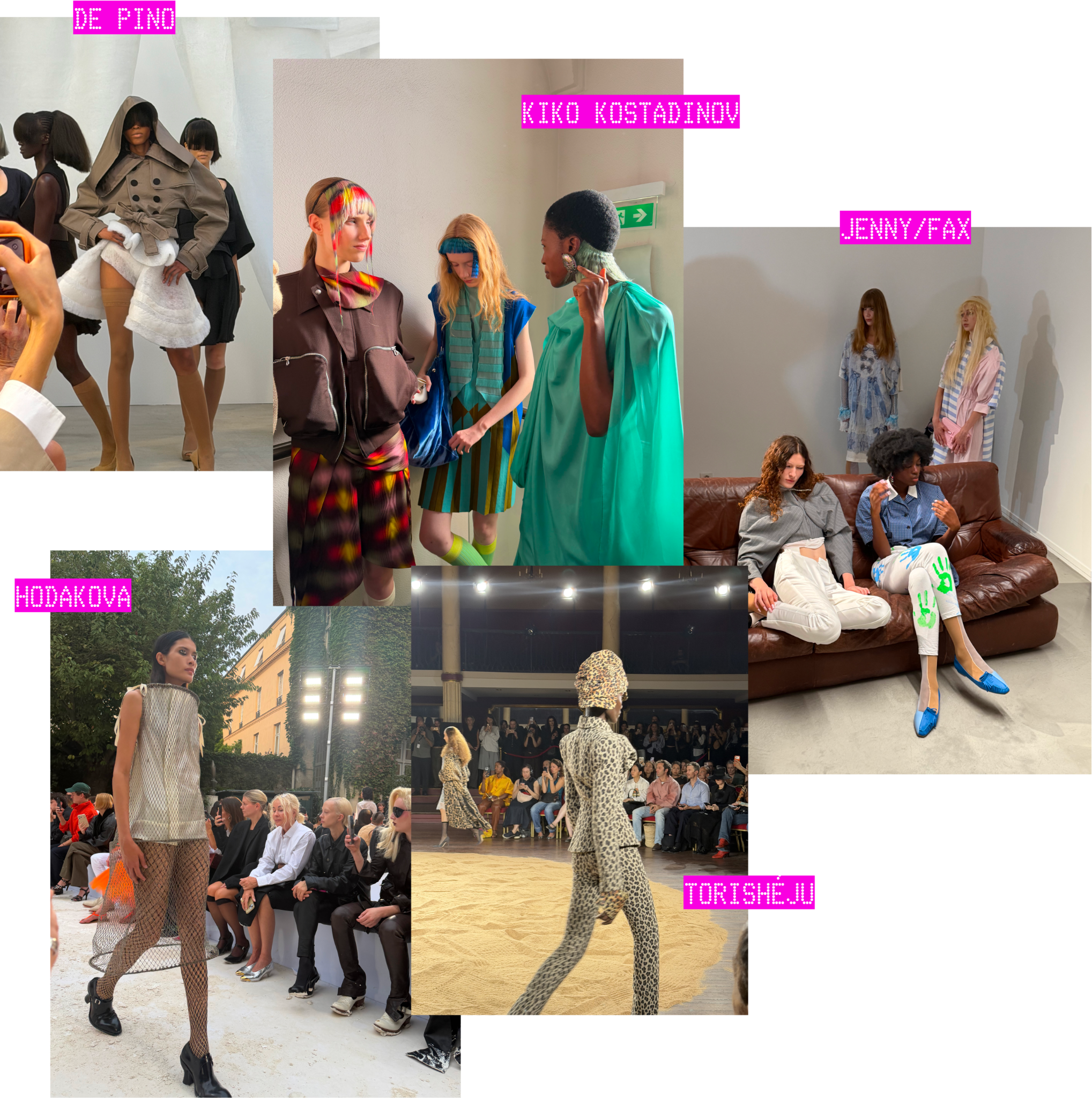
— in i-D
Whoever I bump into, slightly hungover trying to find my third-row seat at a 10 a.m. fashion show, the question “What are you most excited to see this season?” is the only thing I can think to say. “[INSERT INDEPENDENT DESIGNER WITH A NICHE FOLLOWING OF TASTEFUL FASHION PEOPLE],” everyone answers. Every 4 to 6 months we jump on the Eurostar, arriving in a Parisian fashion scene inundated with indie designers, all of them competing for attention within the same tiny slot on the fashion calendar.
It’s no wonder they come here. Paris holds the promise of success and relevance, that you’re either talented enough to be there or clever enough to understand that youth is the currency you spend on a 7-day Airbnb share in hopes that someone important will remember your Instagram handle. But making it in Paris as an indie designer takes, quite literally, everything.
“At times, getting noticed feels as though you have to do something outrageous or something that can go viral,” says designer Meruert Tolegen, who frequently has to remind herself that her work is about the craft and process instead. In a city where everyone is fighting to be seen, making great clothes obviously isn’t enough. While the big houses are stripping back—pressured by the constraints of a recession—the indie designers appear to actually be doing the opposite. Their shows are increasingly theatrical, attesting to the fact that their biggest asset is the spectacle.

PERENNIALS

Art & Photography: Pearl, , , , ,
Writing: , , , ,

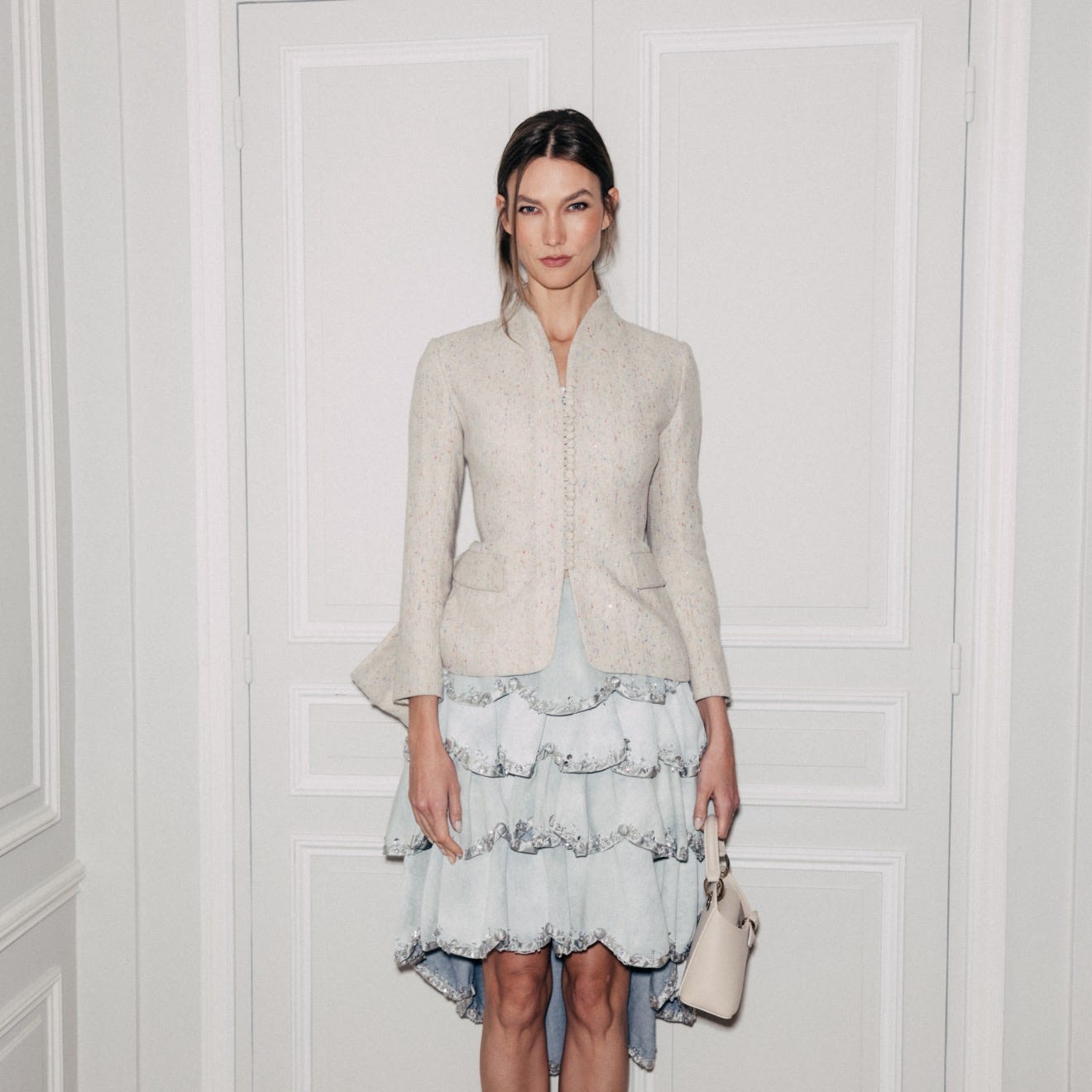
Karlie Kloss is now on Substack, where she’ll be sharing conversations with founders, designers, chefs, and more.

Ichikawa Danjūrō XIII, Japan’s thirteenth holder of one of kabuki’s most prestigious and historic stage names, has launched on Substack.
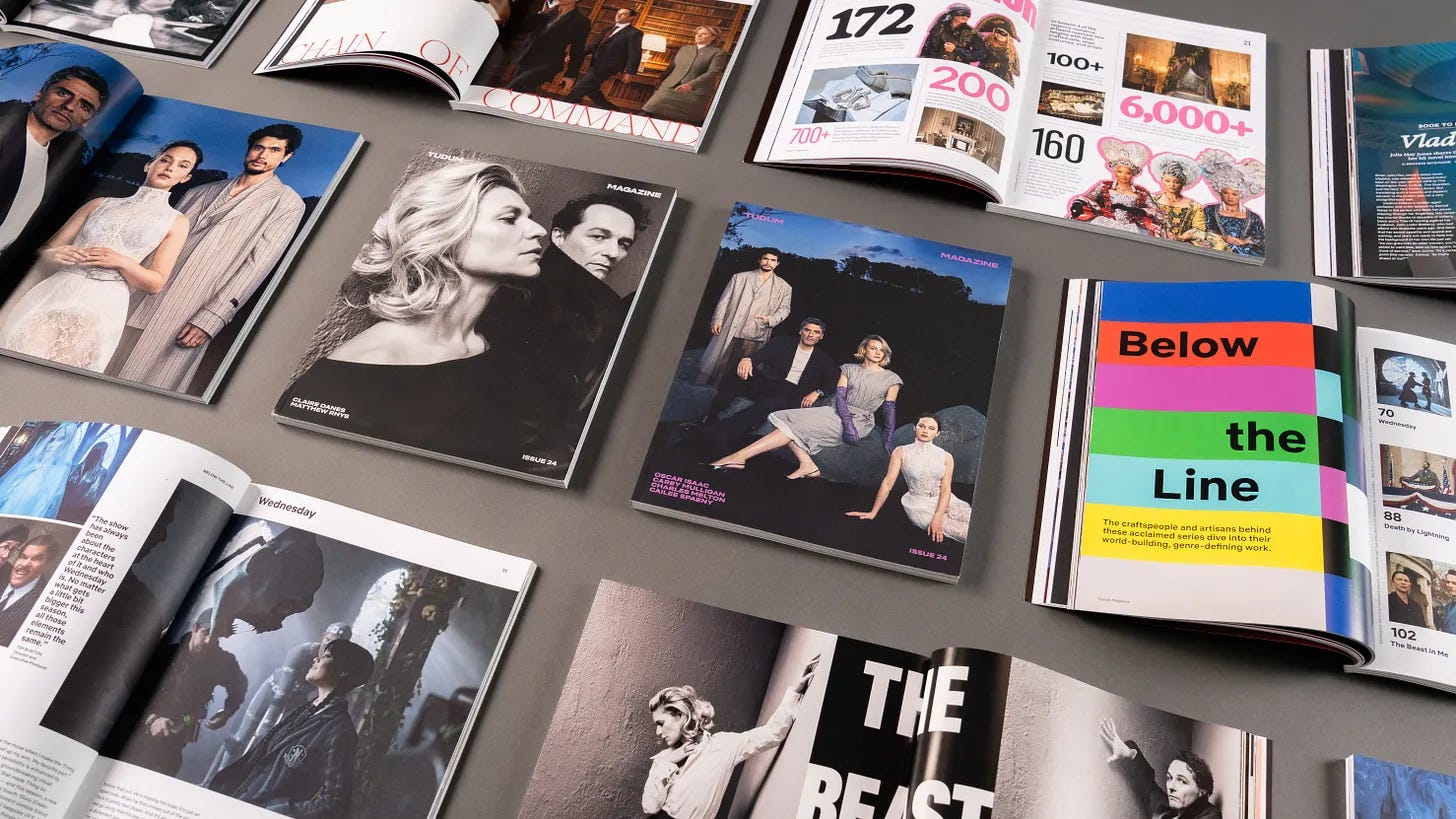
Netflix’s Tudum Magazine, the spot for a behind-the-scenes look at the actors and filmmakers making the industry tick, is now posting to Substack.

PuckPedia, the leading source for hockey news on player contracts and free agency, is now on Substack.

Baited!, a “modern fishing magazine for anglers who just love being on the bank,” has launched on Substack.
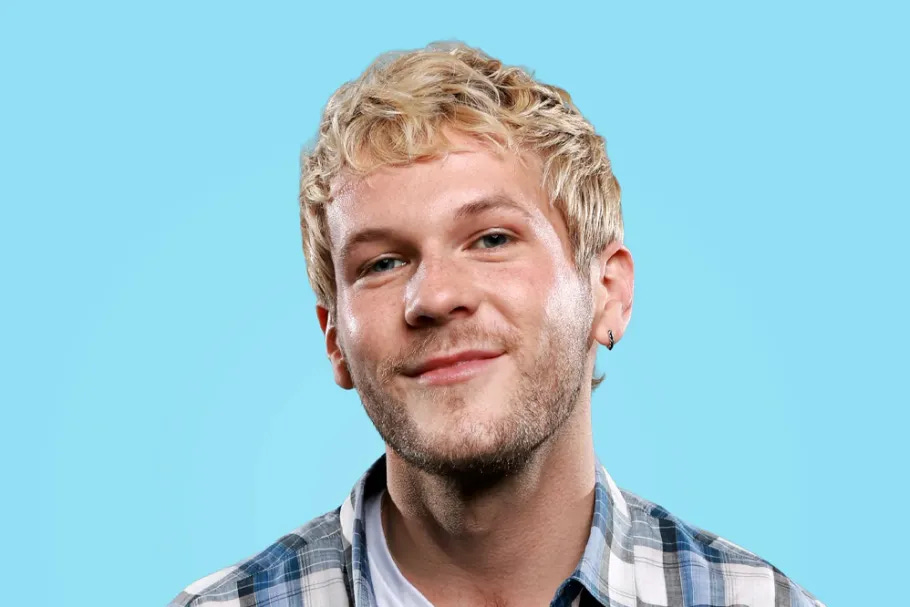
Social media creator and host Davis Burleson is on Substack.

The National Press, a new country-wide news brand with 1,200 journalists across 60 local newsrooms, is now on Substack.

Bryan Curtis, editor-at-large of The Ringer and cohost of The Press Box podcast, is now writing on Substack.

Inspired by the writers and creators featured in the Weekender? Starting your own Substack is just a few clicks away:

The Weekender is a weekly roundup of writing, ideas, art, audio, and video from the world of Substack. Posts are recommended by staff and readers, and curated and edited by out of Substack’s New York office.
2026-10-03 21:04:32
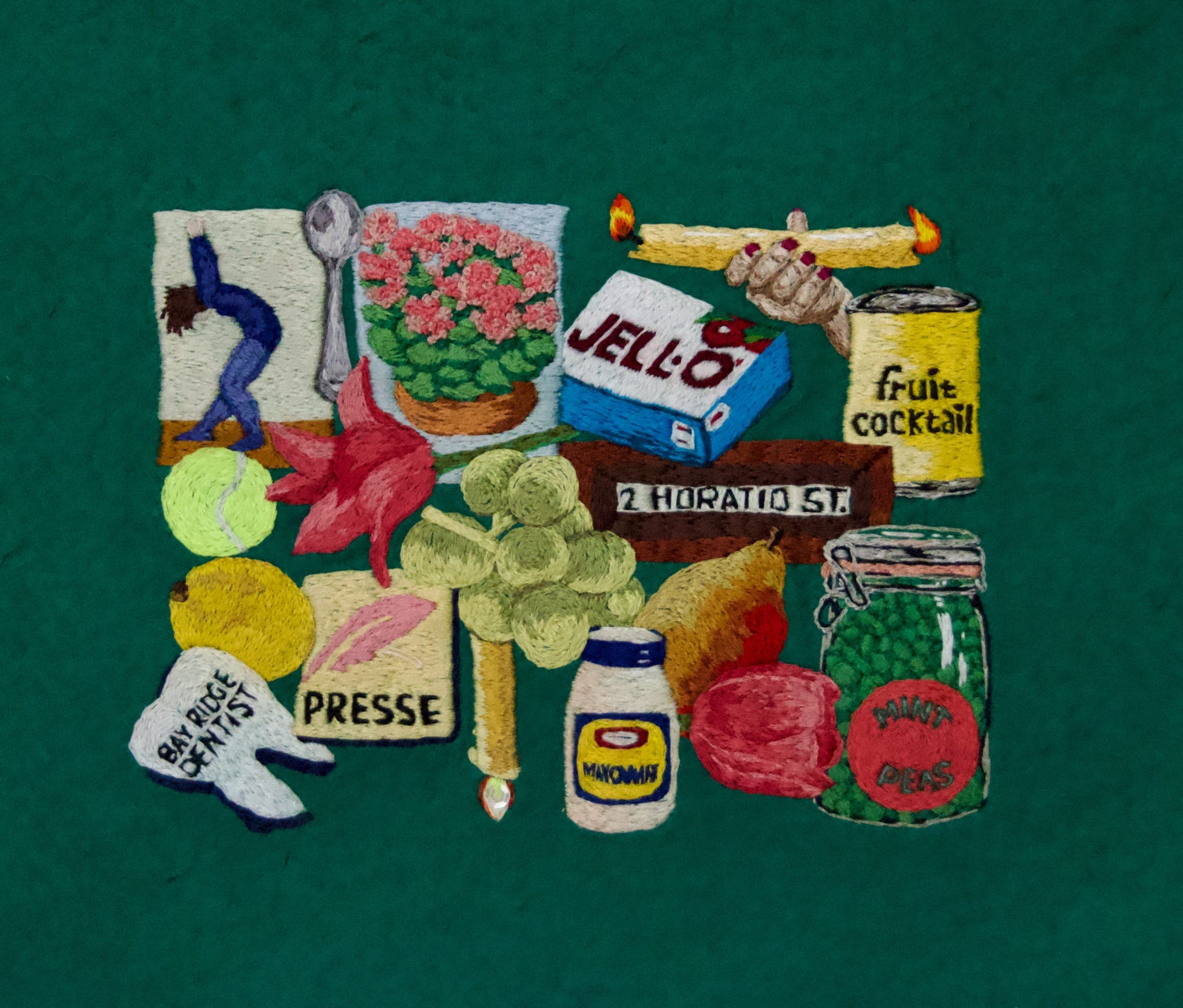
This week, we’re moving to Ireland, wondering what happened to dinner parties, and getting older in an image-obsessed industry.

FRIENDSHIP
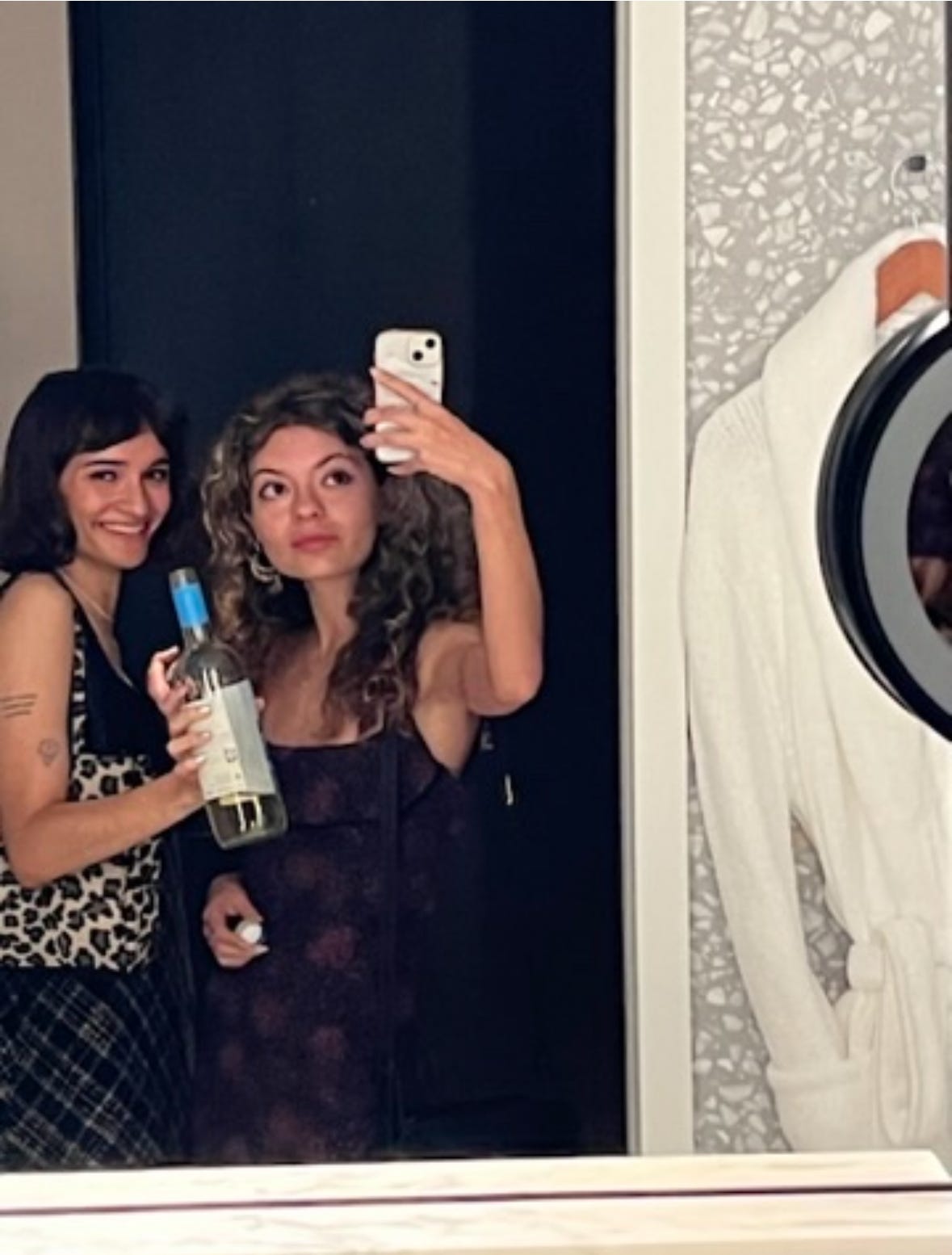
Over the past four years as roommates, Mackenzie and Taryn moved between cities and apartments, going from strangers to best friends. Now the two are saying goodbye and tasked with unraveling parts of themselves from one another.
— in I Will Do Whatever I Want
To Taryn:
There was a time when we had nothing, when we were basically strangers sharing a wall in a dark apartment in Los Angeles, California. A spot nobody liked, not even me—with gray laminate floors, a strange shape, and unreliable plumbing. A friend told me once, “This place has 7-Eleven parking lot vibes,” and all I could do was laugh as a means to mask the hurt of an embarrassment I didn’t know I could catch.
You appeared out of the back of a U-Haul in a white shirt with a big red scrunchie in your hair. I remember the sound, the face of each box, and scanning the inside of the truck to gather as much information as I could about you. I saw cameras with labels and hand-painted furniture. Yellow, blue, and red. The name “Taryn” written in loved Sharpie over and over, in varying caps and scripts. Noting then, feet planted on steel, that if something belongs to you, it really belongs to you.
I was nervous that day and was sure that you’d regret it as soon as the damp reality of my life bled onto yours—that you’d break your lease to disappear as a face on the wall at a party, as the receiver of a side hug, as a singular tagged photo, and a looping plan to catch up.
But most miracles come in disguise.
Slowly, we became close. Ending most nights on my green Craigslist couch, at 3 a.m. or 4 a.m., discussing past lives and dreams. Stuck in a molded milquetoast common place, working retail and stretching a dollar. Both of us sharing wants that might’ve sounded impossible to an eavesdropper or a bad friend, but somehow felt finally achievable while sitting two feet apart.
In 2023, we moved to New York. We had giant suitcases, no plan, and no money.
Collectively, we’ve lived in four apartments together in four years, and I could tell the story of all of them and give the brief history of why and how, but they all end the same:
There were boxes. There was you. There was me. We had everything when we had nothing because we had each other.

THE COSMOS

SOCIOLOGY
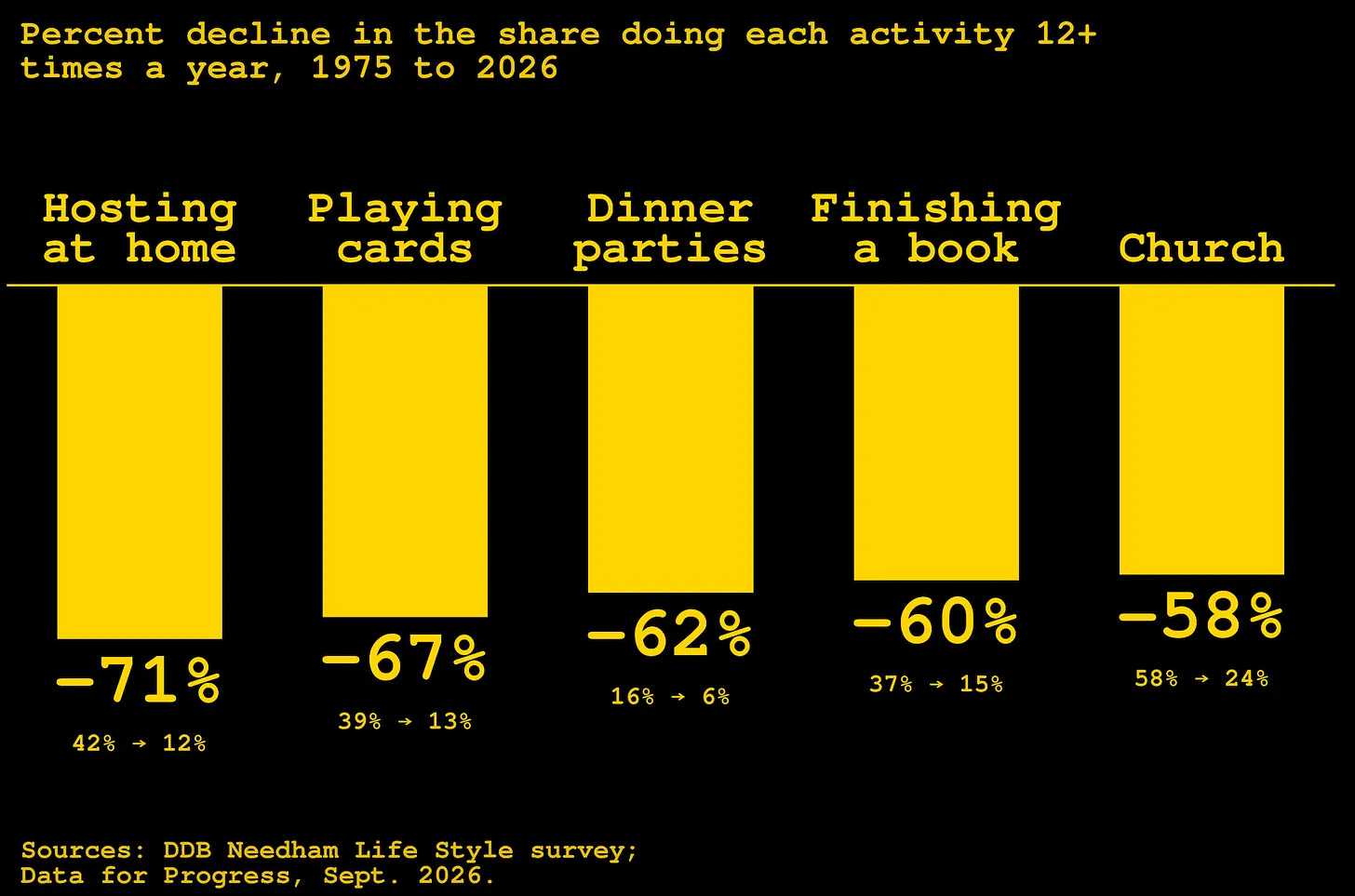
According to a survey, practically no one is hosting at home, let alone throwing dinner parties. Derek Thompson investigates.
— in Derek Thompson
Mid-century Americans knew how to throw a party, for better or worse. In some of the most famous titles of the 1950s and 1960s—Couples, by John Updike; Who’s Afraid of Virginia Woolf? by Edward Albee; Revolutionary Road by Richard Yates—the drama (and martini-soaked melodrama) took place in middle-class living rooms.
The stories were fictional, but the setting was realistic. Until 1975, half of Americans said they entertained guests at their home every month.
But then something changed. Americans stopped throwing parties. Even more fundamentally, they stopped visiting each other. Between 1975 and 1998, the share of Americans who gave or attended a monthly dinner party declined by half. The share of Americans saying they never entertained people at home tripled. While cultural critics often bemoan the decline of organized religion, the dip in church attendance was downright modest compared to the collapse in hosting, according to data gathered by the DDB Needham Life Style survey.
In his 2000 book Bowling Alone, Robert Putnam wrote that if these trends continued, the ancient practice of visiting with friends “might entirely disappear from American life in less than a generation.” Well, check your calendars. One generation and change later, Putnam’s prediction needs an update.
So, what’s the state of hosting in the 21st century?
In the 1970 book The Harried Leisure Class, the Swedish economist Staffan Burenstam Linder wrote that as a society gets richer, leisure time takes on the frantic quality of work. As rich people feel like their downtime is scarce—as each non-working hour practically shouts, “excuse me! you could be making money, right now!” —the experience of leisure time speeds up. We multitask and pack various downtime activities into short periods. Firing up a Netflix show at 9pm that you can half-ignore while you answer email is a perfect activity for people who need their leisure time to feel like half-productive box-checking. Taking several hours to coordinate with other busy people to set up a lengthy dinner party is a tougher sell for the harried leisure class.
That’s a sociological explanation, but I think the decline of hosting is also about macroeconomic trends. In Bowling Alone, Putnam acknowledged that women have historically been the keepers of the family social calendar, planning the birthday parties and neighborhood potlucks. For any number of reasons, women seem to do better than men at making and keeping adult friendships and making plans with other families. But in the 1950s and 1960s, tens of millions of women traded their unpaid household management jobs for salaried jobs, and the family social calendar frayed, as men failed to pick up the slack. As I’ve written:
“In 1970, right around the inflection point of America’s social decline, the share of women between 25 and 54 who participated in the labor force surged past 50 percent for the first time; it’s currently near 80 percent. As more women poured their weekdays into 9-to-5 work, men failed to take over the logistical labor required to fill out the social calendar, and adult gatherings gradually eroded in the age of the dual-earner household.”
Moving from macro to micro: My wife and I love to host parties at our place in D.C. But these get-togethers are a lot of work: conception, communication, coordination, shopping (are your kids coming, or are you getting a babysitter? does your eldest kid eat eggplant? no? okay, we’ll make pasta. oh, that’s right, your wife’s gluten allergy…). These sorts of multi-skilled logistical adventures are almost indistinguishable from the sort of logistical problem-solving that characterizes a good deal of white-collar work. But when both parents are already inundated with literal white-collar work, it’s hard to add the job of unpaid party planner.

STOOPING

FASHION
Like all of us, Mandy Lee is getting older. For the first time, she’s wondering how that might affect her career in an industry built on image.
It takes a special, demonic, and almost masochistic, type of resilience to work in this industry. As I’ve grown in my career, and as an aging 30-something, I’m learning there is a different kind of resilience required when you’re not hot hot or pretty pretty or skinny skinny. That’s not to be self-deprecating. I know my place and I don’t think it shouldn’t be so weird or taboo or uncomfortable to talk about it without people tripping over themselves to try to make you feel better—that is not my intention writing this. I know I’m cute for a 30-something who does her own HMU most days, doesn’t have plastic surgery or a hot body… in the REAL world, but in this digital-first world (without a flashy editor/buyer title or VIC status) being cute/average is the same thing as being ugly, and being ugly is the same thing as being a speck of dust. Invisible.
Oftentimes in these spaces, I feel invisible and oftentimes, I don’t mind it. I’m a trend forecaster, fashion commentator and analyst—my work doesn’t always require an IG photo carousel or GRWM, and thank God for that. Brands invite me to shows and dress me because I’m influential in a different way. I can sell like a hot-girl-influencer because I know my shit and am able to communicate in a way that resonates; a way that doesn’t require having beauty, and sometimes that really sucks to confront. For a long time, I didn’t really care, but lately I find myself wanting to feel pretty and trying really hard to look pretty. Being dressed by brands is an absolute honor. I love clothes. It’s why I started doing what I do, but at fashion week, sometimes working means glam, a full look and photo call and without sounding ungrateful or bratty (because I am so grateful it’s sick) I’ve been dreading it.
Maybe it’s because the bags under my eyes have grown heavier. My skin elasticity is that of an old backyard trampoline. The deep smile line on my right side will no longer go away with gua sha. I don’t have a 23” waist anymore, and I cannot camouflage any of that behind a DSLR. I’m signed with IMG Models as a commentator, and when people ask about my representation, I cannot bring myself to just say IMG, because that would raise eyebrows. The answer is only ever followed with a caveat, “I’m with IMG, as a commentator of course. I’m not a model” followed by some teehees because it’s disarming, and I genuinely don’t want to know what people would say or what questions they might have without that caveat included.
[. . .]
We all know what we’re signing up for when we enter this business. There are no big secrets. We are all aware of the beauty standards and where we fit into them. I knew that going into this industry, but it has been harder to deal with as I get older and more invisible. I worry about my career. I worry I am going to hurt my career by showing my face on a green screen. I worry I’m one unflattering photo away from a “sorry we cannot accommodate you this season” email. I do not like worrying about the direct correlation between how my face looks and my success. I am the best at what I do in the niche I occupy and worry that is not enough anymore.

ORGANIC GROWTH

BIG MOVES
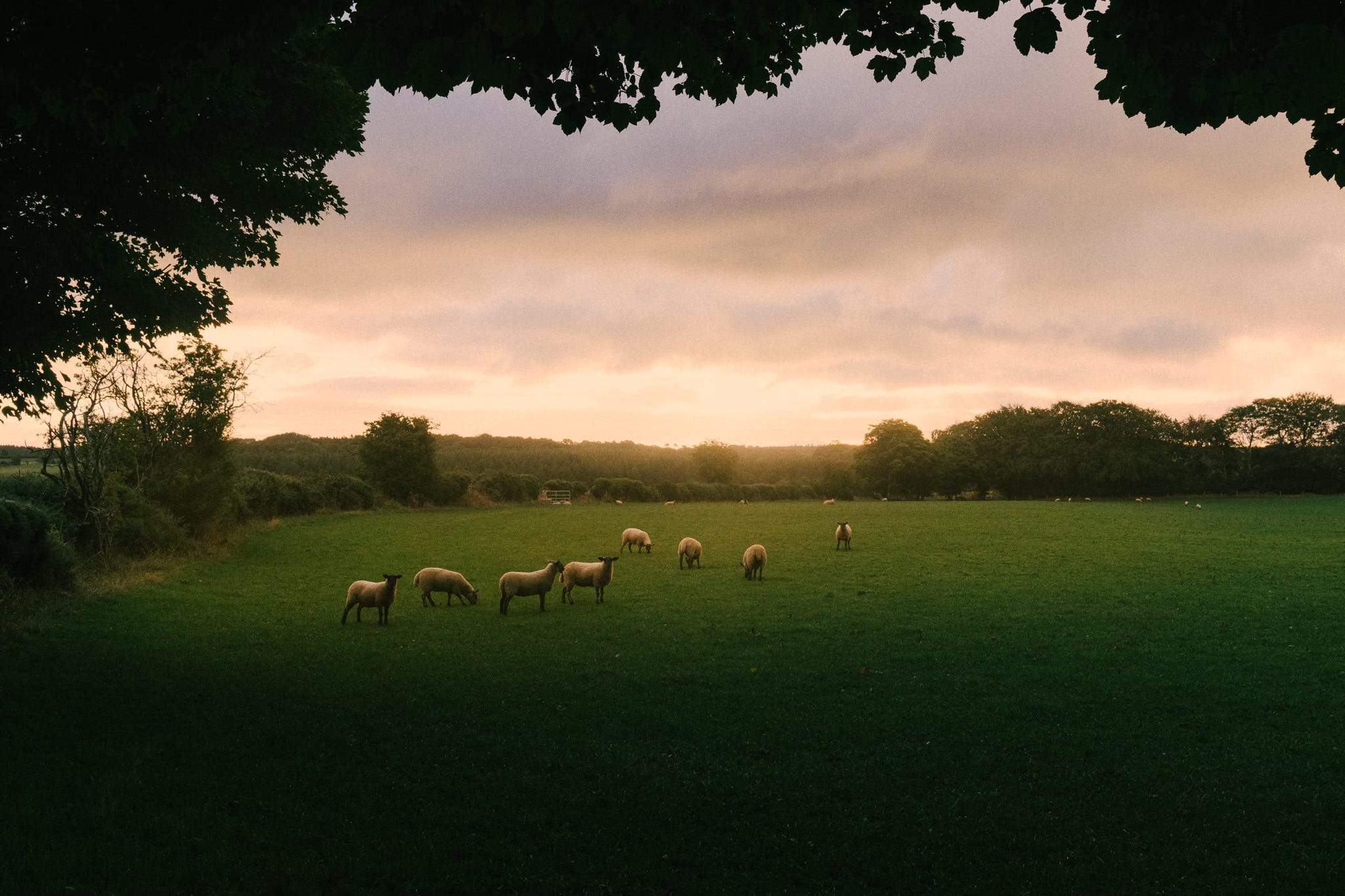
Casey McCallister misses Mexican food and neon-colored candy, but as he reflects on a year of trading the comforts of suburban America for the lush Irish coast, he finds plenty that’s good.
— in The Dirt Road
It has been about one year since my wife, our five-year-old, our golden retriever, and I traded Colorado for a town on the Irish coast. Some of you read the post I wrote on the way out where I laid out every fear I had. The short version: most of the fears were for nothing. A couple were as expected. First, let’s talk about what has been a struggle.
The biggest loss is real, and I refuse to act brave about it. There is no Mexican food here. I don’t mean it’s bad. I mean it does not exist in the form factor that I need. What passes for spice in this country is a casual warning. I once ordered something advertised as “spicy” and where I’m from, it might land a score of 2 of 10. I would hand over real money for what I actually want at this point: a decent flour tortilla and a bowl of salsa made from real peppers. If anyone reading this wants to mail me a gallon of Taco Villa hot sauce from West Texas, I will not be upset. I’ll grant the Irish exactly one concession here: the ground beef is exceptional. Cleaner and beefier. But I did not cross an ocean for superior beef.
The thing that surprised me most is almost anticlimactic, in the best way. Day to day, Ireland doesn’t feel that different from America. You settle in fast. You build a routine and the routine carries you. Wake up. Breakfast. Take the kid to school. Work. Collect the kid. A bit of playtime. Dinner. Relax. Bed. The comforting sameness of an ordinary, happy week. The funny part is that I cannot stand routine. I want life free-flowing and improvised, with every decision made in the moment it happens. It turns out, though, that a familiar rhythm is exactly what made moving across an ocean feel simple, because underneath the new accents and the strange weather it’s just the same good life. The move didn’t blow my life up. It just picked it up and moved it to somewhere a lot greener.
The kid is doing better than all of us. We moved largely for him. To get him near his Irish grandparents and aunts and uncles. I think worrying is the most overrated emotion and, if I’m being honest, I had unwillingly developed a daily worry of dropping him off at school in the states. That part still sits heavy in me and I’m not going to make light of it. What I will say is that the Irish school has been a revelation. The worry is gone. He’s learning to speak Irish, and the friends, my God, the friends. He made them in roughly the time it takes me to decide on a sandwich. I watched him walk into a playground full of strangers and walk out with a posse, while I stood at the gate, a proud father being out-socialized by a five-year-old. Kids his age are just better at making friends. They haven’t learned to be weird about it.

RECIPES

SONICALLY SPEAKING
A new, soft sound is shaping the underground scene.
— in Welcome Magazine
People say culture is a pendulum. It swings back and forth, one era reacting to the last, and thereby informing the next. But the cultural expression of any given moment is not the product of a single pendulum, but many: from maximalist to minimalist, colorful to dark, absurd to rational, all of them swinging at once, competing for influence.
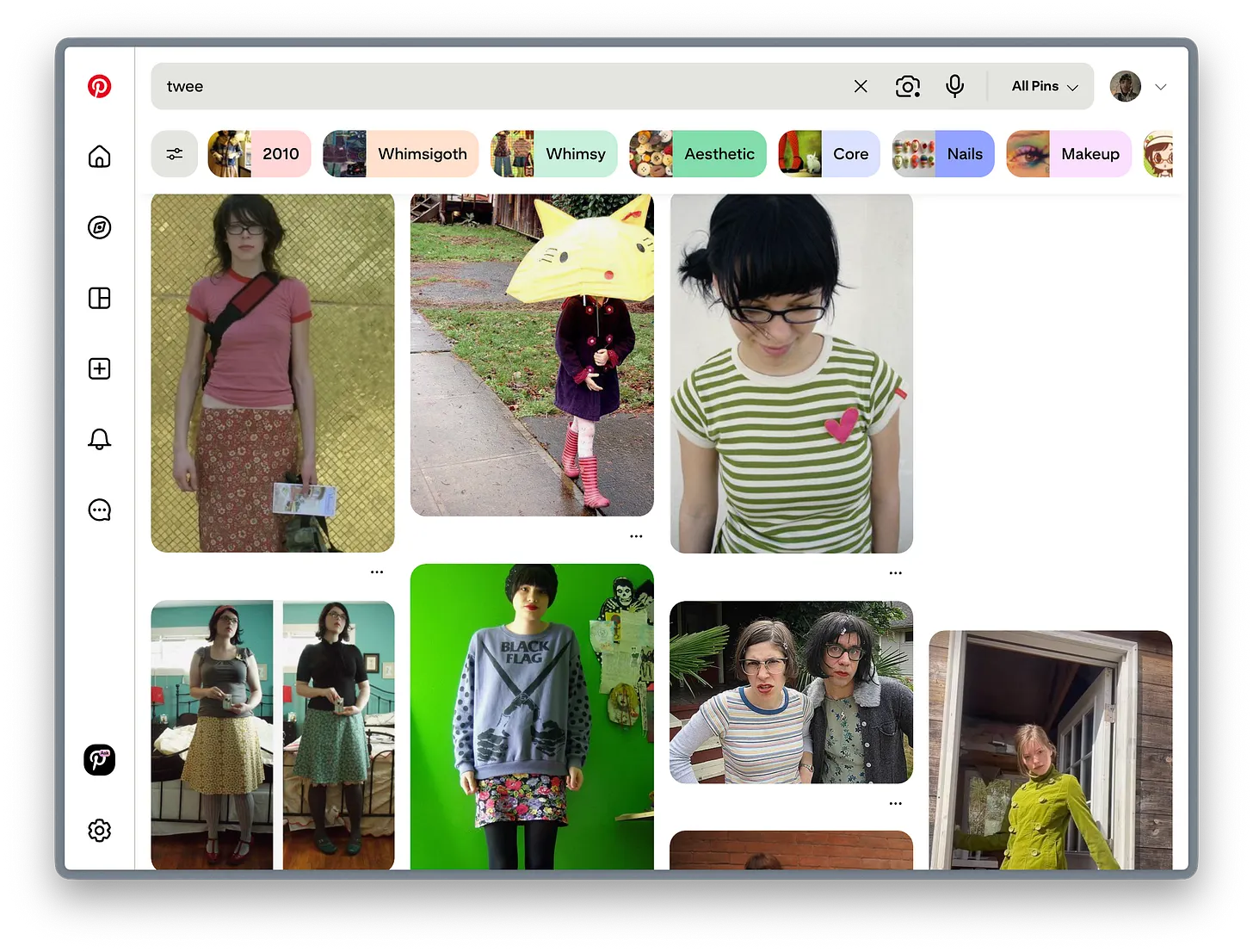
Right now, one of these back-and-forth tensions is shaping the direction of underground music. It is swinging away from a cold and stilted self-seriousness, and toward a soft, earnest sentimentality. The result, which has been taking shape for over a year, is the emergence of a subgenre that is defining contemporary indie electronica: Laptop Twee.
Laptop Twee was coined by blogger and musician Friends& to describe a burgeoning movement that combines (1) the innocent, simple, melody-driven and lo-fi ethos of twee music with (2) the production tools and sounds of bedroom laptop production.
But truly understanding Laptop Twee requires us to begin much earlier, tracing the lineage of twee music from its 1980s emergence in response to a harsh post-punk scene, through its 2010s revival in response to increasing ironic detachment in underground culture.
By understanding these past precedents, we can see that Laptop Twee is not a standalone modern subgenre, but a predictable reaction against the colder, more detached cultural era of the early 2020s, and a third major chapter in one single twee story, this time shaped by our era’s defining technological tool.
[. . .]
First, we should understand what we mean by ‘twee.’ It is most commonly understood as a music genre, but has come to be associated with a more general set of aesthetic signifiers as well.
Sonically, twee began as a genre of innocent and unpolished music under the indie pop umbrella. It has historically been defined by: lo-fi vocals, simple melodies and chords played on guitars and ukuleles, unpolished sounds (think tape hiss and jangly strings), and deeply personal, diaristic lyrics (Beat Happening or The Pastels).
But ‘twee’ today can also refer to a fashion sensibility: vintage silhouettes, Mary Janes, floral patterns, stripes, colorful tights (in contemporary dress, think Zooey Deschanel or Alexa Chung). There is also a more general design aesthetic associated with twee: letterpress graphics, pastel colors, scrapbook layouts, retro homage (think Wes Anderson or Tavi Gevinson).
Philosophically, Twee is founded on sincerity and sentimentalism. It prefers sincerity to irony and favors unpolished, childlike, homemade approaches to creativity. Twee is fundamentally a countercultural reaction, and it has had two major iterations before this present resurgence.
Twee (1980s-90s)
The original iteration of twee began in the 1980s as a subgenre of underground guitar pop that was distributed on cassette tapes among close-knit fans. Unlike other popular post-punk music, which often dealt with nihilistically grandiose subject matter (such as The Jam in the mainstream, Nirvana in the grunge scene, or Joy Division in the art-rock wing), twee had a nostalgic sensibility and innocent lyrical themes.
KEXP writes that bands like Beat Happening were “throwing flower petals in the face” of heroin chic and darker dominant cultures. Other twee bands from this first chapter include The Pastels, Talulah Gosh and The Field Mice.
People seeking respite from sorrowful, cynical ideologies were drawn to Twee, causing the genre (and its associated aesthetic) to spread. After peaking in the mid-’90s, Twee moved back underground as pop homogenized around radio-friendly sounds.

TINY CREATURES

Art & Photography: , , , , ,
Writing: , , Mandy Lee, Hannah Morgan,

Journalist , who’s won Pulitzer, Peabody, and duPont awards, is now on Substack.
Historian, broadcaster, and bestselling author has launched on Substack.
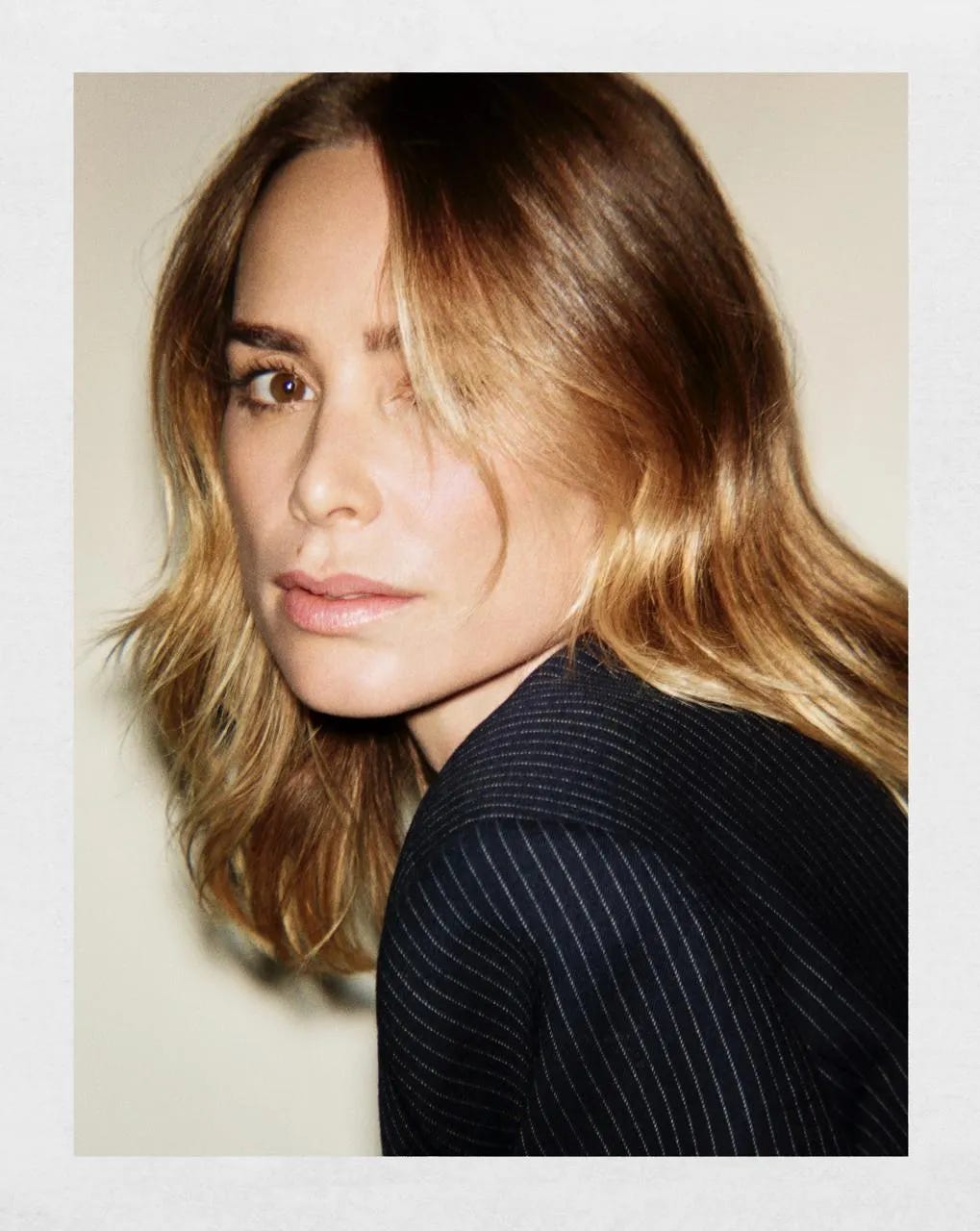
Anine Bing, the designer and founder behind the eponymous global fashion brand, is now on Substack.
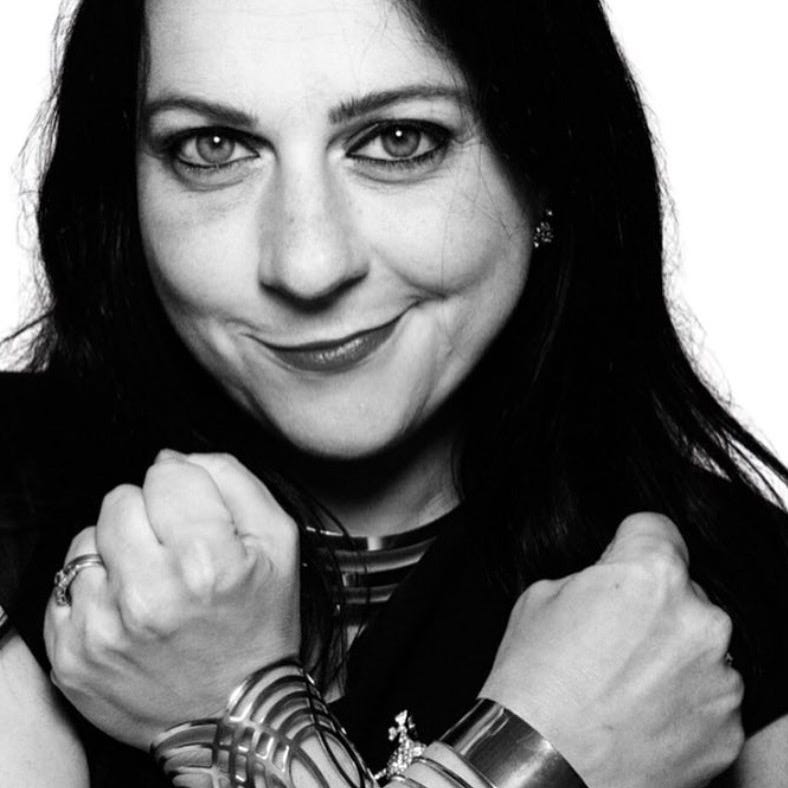
Historian, author, and broadcaster Janina Ramirez is writing about women in history and early medieval art on Substack.
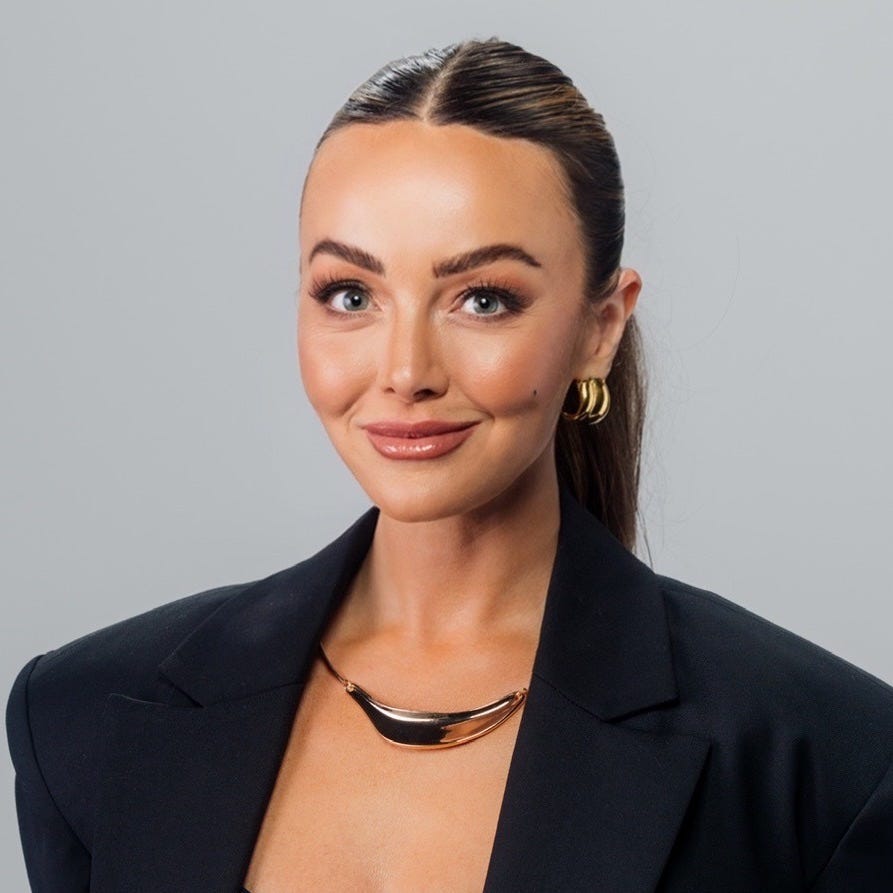
, a former CNN, CNBC, and Bloomberg anchor and current MNN founder and CEO, is now on Substack.

, a former product lead at Facebook, Tripadvisor, and Xbox, has launched on Substack to share over 20 years of experience building for the modern era.

Inspired by the writers and creators featured in the Weekender? Starting your own Substack is just a few clicks away:

The Weekender is a weekly roundup of writing, ideas, art, audio, and video from the world of Substack. Posts are recommended by staff and readers, and curated and edited by out of Substack’s New York office.
2026-09-26 21:02:54
This week, we’re remembering when writers got paid to hang out with famous people, inventing new breeds of apple, and traveling through Spain in the company of older women.

WRITING
The celebrity profile, once a distinct art form, feels diluted in contemporary media: long features have become short Q&As, journalists have been replaced by celebrity interviewers, and in some cases, a written product has been replaced by video. Jonah Weiner, who profiled Drake, Daft Punk, and more for Rolling Stone in the 2010s, reminisces.
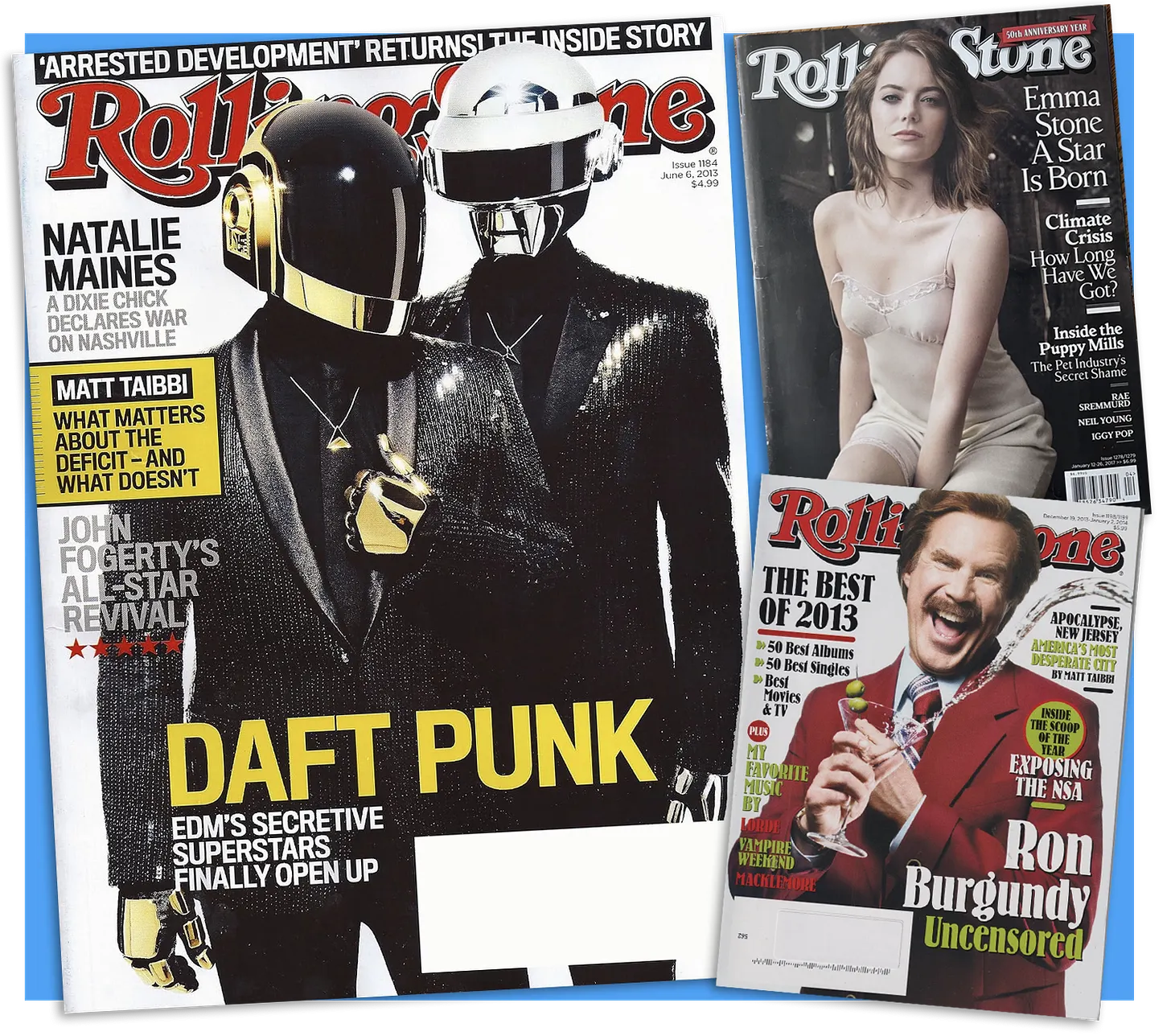
—Jonah Weiner in Blackbird Spyplane
Toward the end of 2010, Rolling Stone signed me to a freelance contract. I’d been writing for them for a couple years, and writing profiles of musicians, actors, filmmakers and artists since the early 2000s. The magazine agreed to pay me a fee of $90,000 annually, and I owed them 35,000 words in return. These sorts of contracts used to be common during the magazine business’s ’90s and early-2000s boom times. By the time I signed mine, they were pretty rare. These days they’re virtually unheard of.
I loved the job, which sent me traveling all over the world, meeting fascinating people, writing about what they were like and how they made the things they made. The work was very fun, to no small extent because I took it very seriously—even if there were times when it felt deeply unserious (“We need you to fly to L.A. and hang out with Rae Sremmurd and their pet monkeys in a rented mansion”). I’d graduated from college intent on building a career as a magazine writer, and while the concepts of “career” and “magazine writer” were drifting further and further apart, I counted myself among the lucky ones who’d managed to pull it off. Phoning it in would have felt not merely depressing, but unconscionable.
When I was assigned to profile people whose work I admired—Daft Punk, Paul McCartney, Emma Stone, Drake, Will Ferrell & Adam McKay, Joanna Newsom, and Steve McQueen among them—I strove to file the liveliest, sharpest, most illuminating account of that person that had been written.
And when the subject was someone toward whom I felt what you’d call a less-immediate interest—say, Bruno Mars, or the Chainsmokers, or Macklemore, or Travis Scott? I strove to write the best profile that had ever been written of them, too. I owed that much to readers, and to myself.
Also, people had a way of surprising you. Bruno Mars was the man. So was Macklemore.
I cared about profiles the way I imagine a songwriter cares about songs: The profile is a popular form whose conventions, formulas and generic constraints—and whose opportunities for playing around with all of the above—absorbed me to no end.
I befriended fellow writers who felt similarly, with whom I could talk about, say, Larissa MacFarquhar’s 2012 New Yorker profile of Hilary Mantel—a piece whose brilliance was consolidated, in a quietly audacious way, by the fact that in its nearly 10,000 words, MacFarquhar somehow managed the incantatory feat of using the word “she” some 405 times, while using the name “Mantel” only twice.
I was thrilled to pieces by profilers who demonstrated that level of attention, ingenuity and commitment to the craft of rendering a subject on the page. I loved reading profiles by Chris Heath, Ian Parker, Lauren Collins, Alex Pappademas and Molly Young, all of whom are uncommonly perceptive about their subjects, but also a plain delight to read in their own right, from one snappy sentence to the next. Certain profile-appreciating ball-knowers still drop their jaws talking about Amy Wallace’s 2010 Garry Shandling profile in GQ, or Stephen Rodrick’s 2013 Paul Schrader profile in the New York Times Magazine. I’d read profiles like that and aspire to achieve some fraction of their greatness in mine.
Different writers approach profiles in different ways. Since I mostly write about people in the arts, my fundamental interest has always been in creative decisions, in process, in the problems one encounters trying to produce something great. Negotiating for access to a subject, the three things I reliably ask for are 1. a sit-down interview, 2. time just hanging out in their orbit and 3. time watching work happen. I tell myself that even the most famous person is famous because they’re very good at doing something. How do they actually do it?

WAKE-UP CALLS

FORAGING
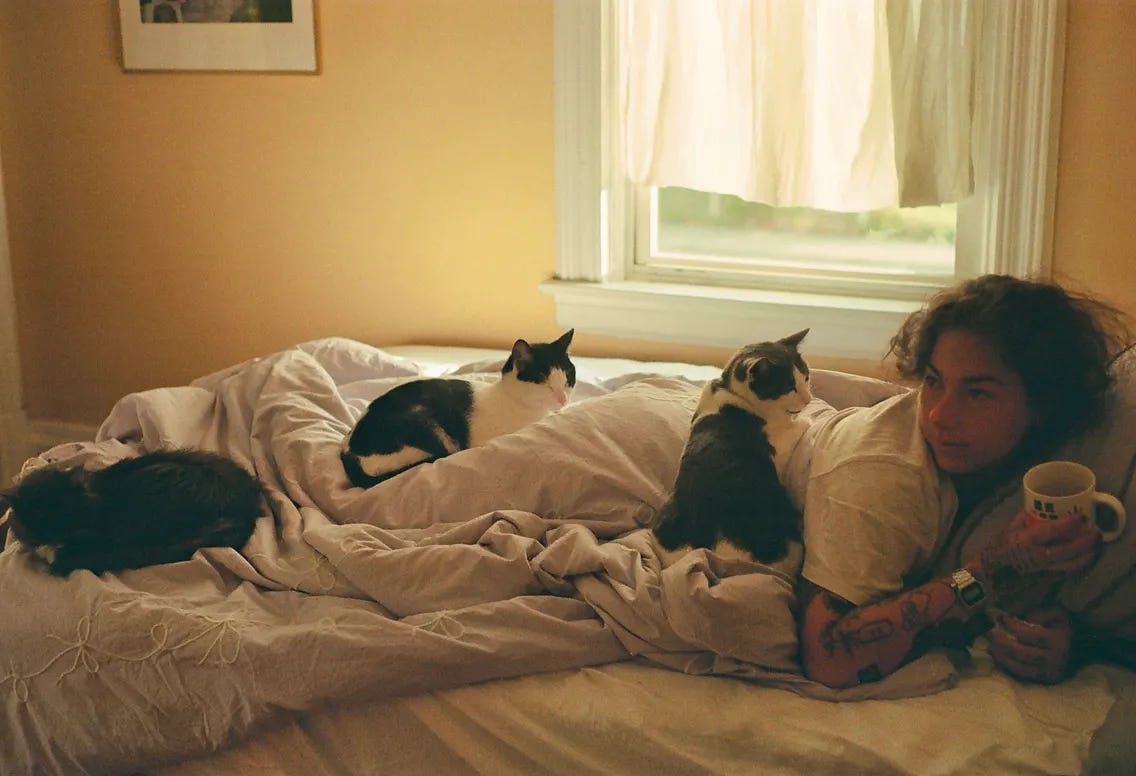
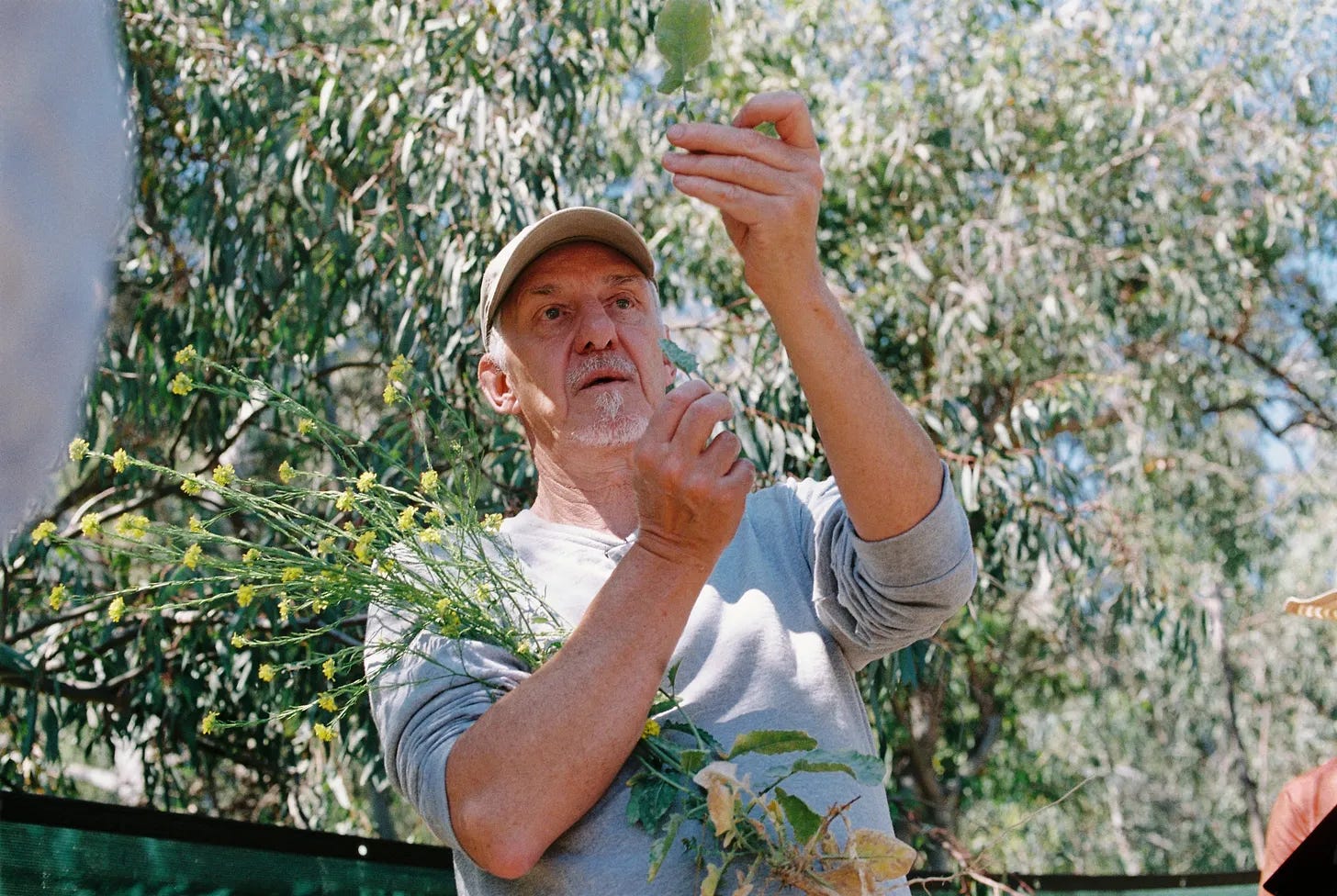
In a past life, Pascal Baudar worked in tech. Now, from his California farm, he teaches people how to find food in the wild.
— in counteroffer
Pascal Baudar stood before a bush of poison oak and said, “In nature, the poison and the remedy are often found side by side.” He reached down and plucked some nearby mugwort, the natural salve for a poison oak rash.
Below is the sequence of thoughts that ran through my mind as I watched him do this:
Wow, that’s the most poetic thing I’ve heard in a long time.
Wait… is that the most poetic thing I’ve heard ever? When was the last time I heard anything poetic?! Oh god, is my life an empty, meaningless disas—
I need to follow this interesting man around.
This spiral occurred during one of Pascal’s legendary foraging classes (he’s foraged for Michelin-starred restaurants like N/Naka), where I had paid $69 to follow him around. (TIP: his classes always sell out, so sign up early and consider going each season so you can meet and taste all the different plants.)
“My first memory in life is foraging with my grandmother in Belgium. My second memory is of us being chased off the property by the landowner,” Pascal told us as he explained what led him to build an artist’s life around the ancient practice of foraging and wildcrafted food.
“He is funny, but not in an oppressive way!” I thought.
As the class went on, Pascal casually shared one astonishing insight after another—knowledge about sweet insect secretions, an incisive critique of commercial farming, a remarkable story I immediately wanted to cheapen by turning it into a film or TV show.
[. . .]
Pascal makes incredible ceramics from wild clay that many Michelin restaurants use to serve their food. Each piece is a “representation of the land and a testament to a specific time and place. There is a bit of magic happening when you create a dish and the plants you are using grew from the same earth as the dishware. It’s full circle.”
I learned that in a past life, Pascal was a creative director and graphic designer who worked in tech. He built his fortune during the dot-com bubble, only to lose everything in the span of a few hours during the crash.
He only listens to electronic music, which he played on our drives, making me feel like I was in Blade Runner or Mad Max or the first 30 minutes of Sirāt.
I asked him what TV shows he liked growing up, and he explained that there was no such thing as shows, plural. Growing up in Belgium in the 1960s, the only thing on TV was La Piste Aux Étoiles, a broadcast of a Parisian circus.
He jokes that his herbal wines and fermented beers are his children, and he checks on each jug before he leaves his studio for a considered stretch.
When we went foraging for clay in the desert, he walked ahead of me in snake gaiters in the event of a rattlesnake encounter, which made me wonder, “Can snakes attack from behind?”
While off-roading, Pascal stopped beside a bush of thistle sage and told me to pluck one. I got out of the car and did as instructed, handing him what looked like a mini morning star weapon. He shook it close to my hand so I could catch the mature seeds. My mind toggled between two polarized thoughts: “nature is miraculous” and “please don’t poke me.”
He told me that living in nature, off the grid, forces you to confront life and death every day. “You can love something dearly and the next day, it’s gone. It’s so crazy.” The goat farm he lives on had three Great Pyrenees. Two have been killed by mountain lions. When I asked him how he knew it was a mountain lion and not coyotes or <insert weird predatory animal I don’t know about>, he replied, “It was surgical. They unzip you. Open up the chest and eat all the organs. They leave the meat.”

SELF-CARE

FRUITS OF LABOR
José Andrés visits Honeycrisp headquarters to taste the apples of the future.
— in Longer Tables with José Andrés
People… Last weekend I had the amazing opportunity to visit the Minnesota State Fair while working on a new cookbook about American food (more on that soon…!) and while I was in the area, I went to the University of Minnesota Landscape Arboretum, part of the College of Food, Agricultural and Natural Resource Sciences, where they’ve been developing new apple varieties for more than a century. They’re the ones who created the very famous, very delicious Honeycrisp apple, and maybe you’ve tasted a SweeTango, or a Zestar, or a SnowSweet? All apples created at the University!
There are apples you’ve never heard of, apples that don’t have a name, apples that you would love but might not be released to the public for 10, 20, 30 years!
I got to taste this unreleased apple, apple 1837… it’s astonishing. The pink streaks in there; it’s so beautiful. I hope we can all eat them someday!

BOGO

FITNESS
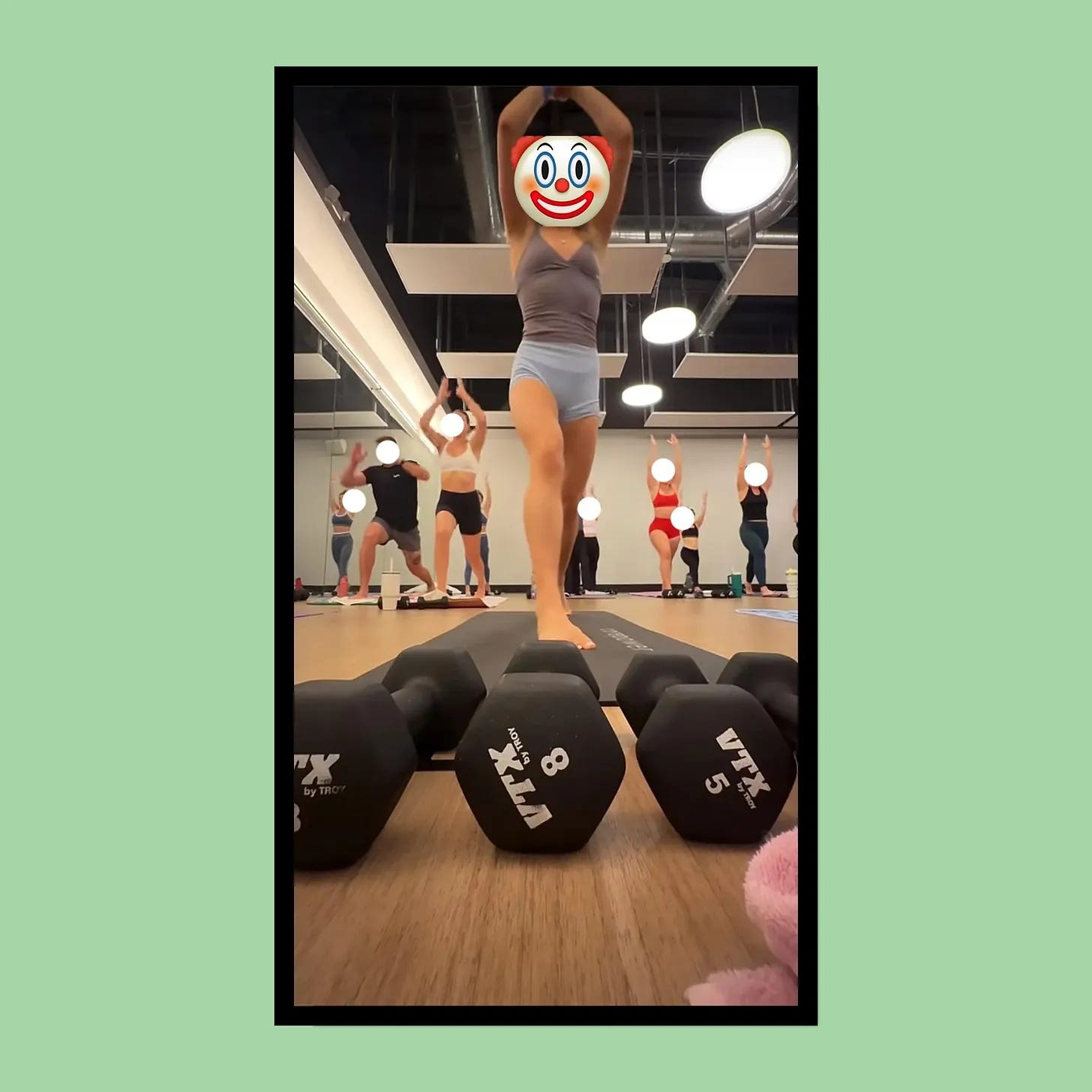
Mikala Jamison urges everyone in group fitness classes, from attendees to instructors, to stop filming themselves.
— in Body Type
Let’s not mince words: No one should be filming in a public group fitness class in 2026. If you do so without getting the express consent of every person who might appear in your video, you’re a ghoul who deserves content creator jail (the worst jail). If you’re a group fitness instructor, you have a responsibility to uphold the no-filming directive for the good of the fitness ecosystem. If you don’t, you’re bad at your job.
Maybe you’ve seen any of the innumerable videos posted by someone saying they’ve changed spots or even left the class because they were visible in some influencer’s video without their consent. Maybe you’ve been such a person. Filming in class has the predictable effect of making other participants uncomfortable because most people who aren’t content creators don’t want to be filmed, period, and certainly not when they’re in a vulnerable, effortful context like a fitness class.
Here’s a Reddit thread from several months ago in which people say they stopped going to classes because of filming. Hey, gyms: You’re losing money. If you stopped letting people film, you’d probably lose less. And here’s an idea I shouldn’t give you for free, but I actually care that gyms are better spaces for everyone: Start hosting some content-creation-centric classes a couple times a month; charge a little extra and let everyone who wants to record attend under the shared agreement that it’s OK. It shouldn’t have to come to this but let’s be solution-oriented, huh?
I was a certified group fitness instructor who worked in gyms for around six years. Many of my classes skewed a bit older, so I didn’t have to deal with tripods and body checks and performative legging adjustments in my rooms, but I did ask people to stop texting or whatever a couple of times mostly because it was unsafe (you’re on an indoor cycling bike, use both hands!) and it annoyed me. Instructors: It can be done. Brace your core, grow a spine, and command the goddamned room you’re paid to command.

WEARABLE TECH

TRAVEL
E.R. Fightmaster sets out on a journey to better understand both the Spanish language and women who love beige clothing.
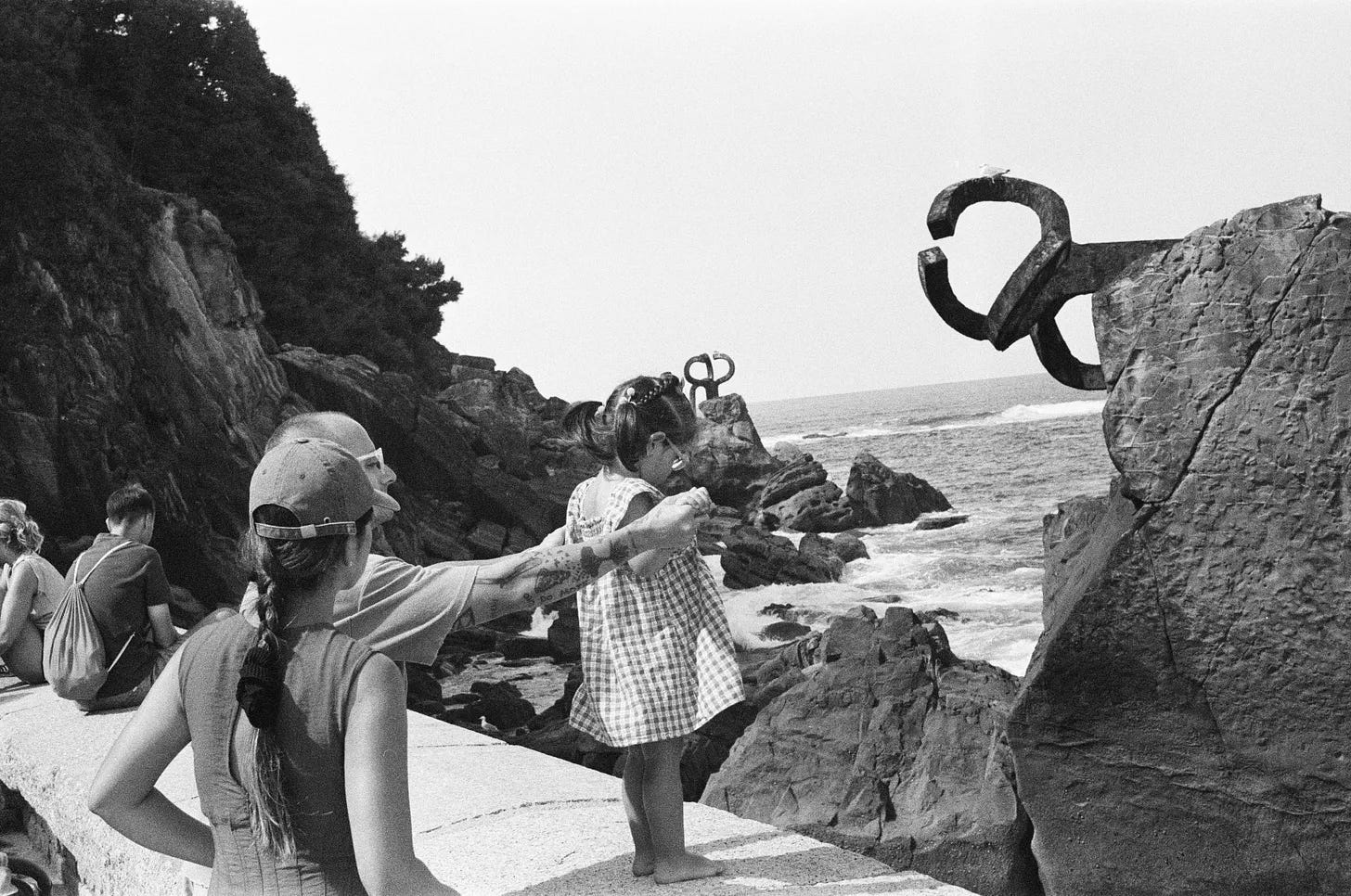
— in E.R. Fightmaster
I am traveling through Spain with my mother, Nancy, and her friend, Karen. Karen recently retired from two and a half decades teaching kids with disabilities and is now learning Spanish to better communicate with her half-Columbian grandson. She is not, in fact, a Karen, so I have empathy for her name-situation.
My mom managed to break her hip, her arm, and her face this summer. Right before this trip, she went ahead and broke her toes. Despite all this, we have walked roughly 4 miles every day. She can’t be stopped and that is partly why I am here. As a cop and a caregiver. But the other part of why I am here is that I can feel our chances for doing this exact type of trip diminishing year by year. I heard a terrible rumor that moms do not live forever and I have since gone out of my way to make sure I take advantage of her time on earth should that be the case. Not sure there is any science behind this so do NOT panic.
We are all here, all three of us, to take a Spanish language course.
“Dan-ger-ous.” What my mom and Karen said when they spotted the all-beige clothing store across the street from our Airbnb in San Sebastian. I love the company of older women and I always have. Their vices range from the tame (taupe fabric) to the psychotic (I cannot legally say). Later on in the trip, while walking down the boulevard, Karen was so overwhelmed by the soft cream colors of the clothing in the windows that she said, “This is my year. This is my Fall.”
After our first days in Madrid and Segovia, we had finally touched down in San Sebastian, a handsome city in the north of Spain, a crown jewel of Basque country, nestled in between dark green hills and the deep blue Bay of Biscay.
My class is made entirely of Germans except for me, Karen, and one lovely 22-year-old Philippina named Jade who is using her summer break from business school in Madrid to learn more Spanish. Jade is chic and friendly and beautiful and we spent the getting-to-know you portion of the class talking through our horoscopes and discussing the pros and cons of Jade’s upcoming dick appointment with her ex from Portugal. I <3 Jade.
There are three Germans in their early 20s and two Germans in their 60s. I prefer the older set.
Desafortunadamente, during the full-class introduction portion, I said I was a musician. The teacher good-naturedly did a cursory google search and suddenly, projected on the white board was me and Caterina in lab coats, me leaning against a car for Shrill promos, me with my guitar on stage for the Tolerance tour. She clicked on the link to the Glide video. When the honey started running down the tanned thigh of the video’s lead gal, I screamed, “ESTA BIEN.”

ONE MAN’S TRASH

Art & Photography: , , , , ,
Video & Audio:
Writing: Jonah Weiner, , ,

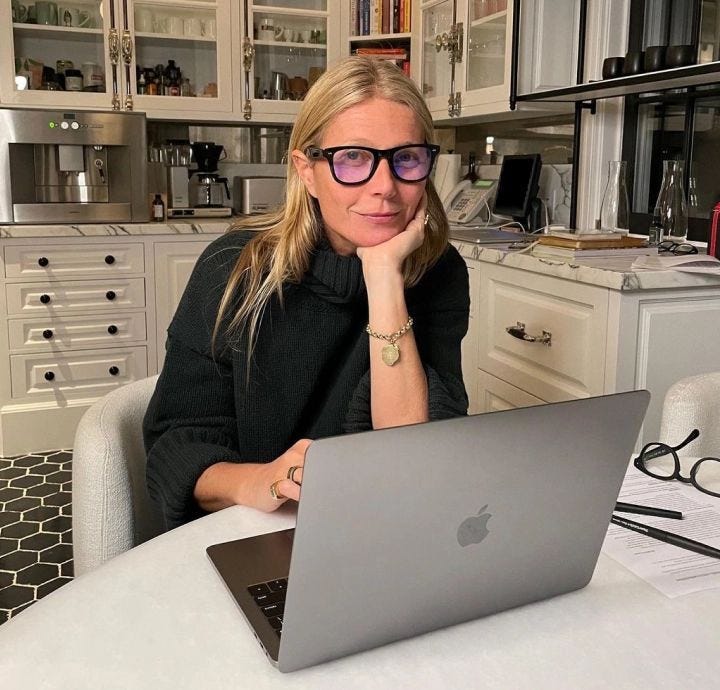
Gwyneth Paltrow and goop are now on Substack, where she and other editors will be sharing exclusive recipes, travel recommendations, and “hidden gems” from Gwyneth’s Notes app.

U.S. Olympic gold medalist and Alpine skiing world champion Breezy Johnson is now on Substack, discussing the psychology and performance of elite athletes.
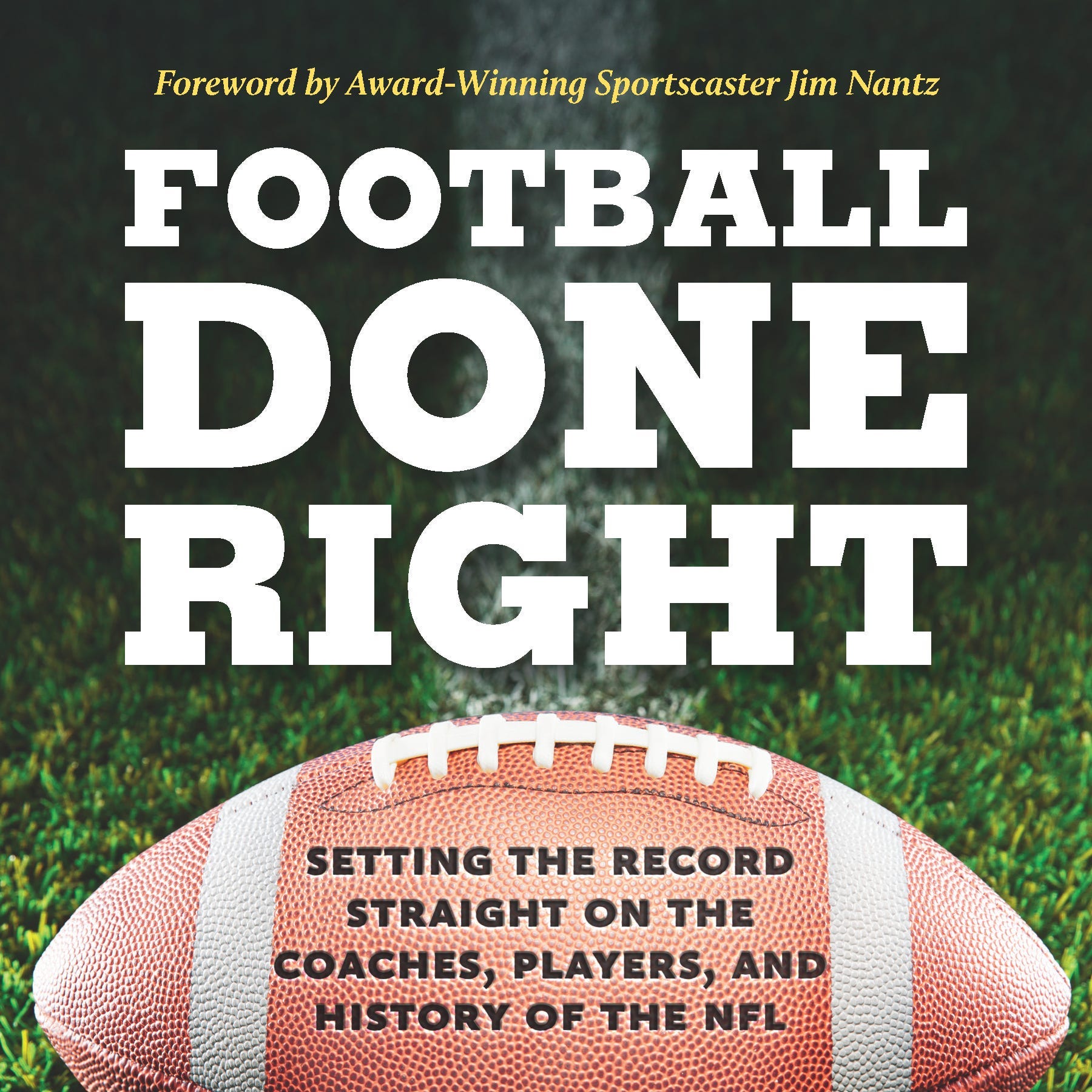
Michael Lombardi, a longtime NFL executive and former general manager of the University of North Carolina’s football program, has launched Football Done Right on Substack.

Award-winning Miami Herald sports columnist Greg Cote is now on Substack.
Maya Singer, a filmmaker and contributing editor at Vogue, has launched a Substack.

Joe Bini, a longtime film editor who has collaborated with Werner Herzog, Lynne Ramsay, and Andrea Arnold, will be discussing cinema, creativity, and imagination on his Substack.

Inspired by the writers and creators featured in the Weekender? Starting your own Substack is just a few clicks away:

The Weekender is a weekly roundup of writing, ideas, art, audio, and video from the world of Substack. Posts are recommended by staff and readers, and curated and edited by out of Substack’s New York office.
2026-09-19 21:03:30
This week, we’re selling coffee in the Scottish isles, pulling back the curtain on Fashion Week, and turning our attention toward a new kind of online safety.

PARENTING
After an abrupt divorce, Chloé Caldwell was separated from a child she helped raise. Sharing music was their lifeline.
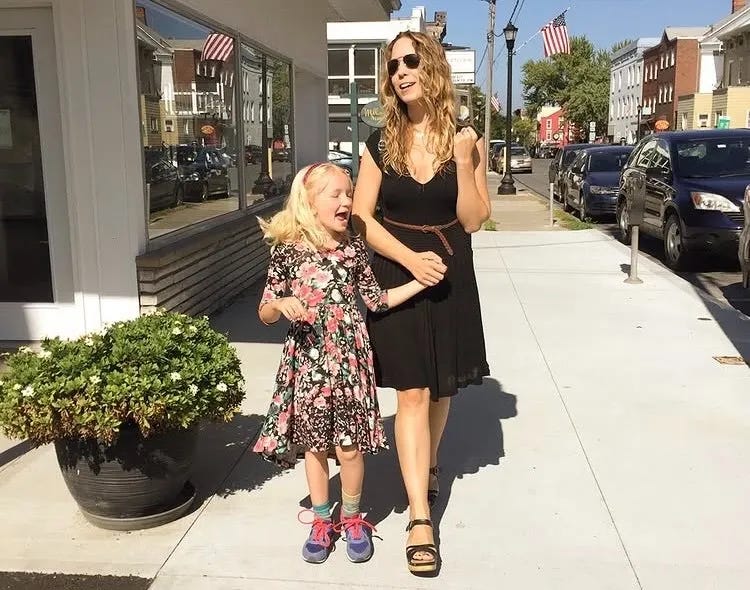
— in Memoir Land
For her 13th birthday in June 2023, I had made my stepdaughter a playlist entitled “Music For When You Turn Thirteen.” When I’d begun making the playlist that April, I hadn’t yet known I’d be getting divorced from her dad that summer, and that it would alter our dynamic in ways I wouldn’t be able to fathom. I’d added songs to it like “Thirteen” by Elliott Smith and “Teenager” by Camera Obscura. We all need someone in our life to expose us to Fiona Apple, Kate Nash, and Neko Case, and I was that person for her.
In the aftermath of my overnight divorce, in an unprecedented series of events, I’d been slowly, and then all at once, forbidden from speaking to my beloved stepdaughter. It was a blindsiding and shocking result of the split, something I had been naive to. At first, I thought the constraints her mother had put in place would lift, but then the holidays went by, our birthdays, and another round of holidays without any changes to her mother’s harsh directive. Our bond had been deep, because I solo parented often while my ex-husband had been a touring musician. It often felt that the two of us were the core family.
To have your stepkid taken away so abruptly from intimate living quarters, then not being allowed contact in any form, even mailing cards, is not for the faint of the heart. Those two years of estrangement were the most heart-aching and isolating of my entire life. I was what, an ex-stepparent? An even loneliner designation. Where was even the language for that?
Desperate to connect with her—to make sure she knew I was still there, emotionally—since I couldn’t do anything physically like buy her snacks or give her a hug—I continued adding songs as subliminal messages to the “Music For When You Turn Thirteen” playlist. I liked imagining us listening to the same song at the same time. It was the only piece of connection I had left.
[. . .]
In July 2025, six months after my father had a heart attack on the street in New Orleans (after a day of work at his music store, couldn’t be more punk rock), my stepdaughter walked into my dad’s memorial I hosted in Hudson at Time and Space Limited. People talk about their jaws dropping hyperbolically, but this really was a jawdrop. Imagine yearning for someone every day for two years, and then they appear next to you. She entered casually; only because of how well I know her I could tell she was slightly cautious. She wore black, faded jeans and a black T-shirt with the logo from my dad’s popular music store, Musica. She’d gotten the T-shirt when she was around 9, and at 15 she was growing out of it. Other people had showed up to the memorial in the same shirt.
It had not occurred to me that she would come, though I’d included her on the email chain with the invitation details despite knowing that, per her mother’s wishes, I was still not allowed to have contact with her via email. I had, as much as I could, accepted my reality.
We sat next to each other, whispering throughout the memorial, holding hands. I asked her if she wanted to get up and play a song, and she nonchalantly said, “Sure. But I didn’t bring my guitar.” I told her there were guitars ready to be used, as others were playing music there, too.
“I’ll play ‘Blackbird,’ because he taught it to me,” she said.

VAN LIFE

TECH
A slew of safety researchers, including Joe Benton, have left their positions at various AI companies, warning of potential dangers coming humanity’s way.
— in Joe Benton
Two weeks ago, I left the safety team at Anthropic. I will soon be joining METR, an independent organization that evaluates how safe AI companies’ systems are. I’d planned to write about that decision in more detail at some point, but Jacob [Coxon]’s resignation this week made me want to say more now.
Like Jacob, I believe that AI companies are on track to impose an unprecedented level of risk on society. AI capabilities are already improving extremely fast, and the companies are trying to go even faster. Frontier AI companies are racing to build AI systems that can recursively self-improve. The aim is to build “superintelligence,” or an AI system much smarter than any human. If they succeed at this goal, the rate of AI progress may go from merely fast to uncontrollable.
Within the next couple of years, we may be sharing the world with AI agents smarter than any human alive today. These AI systems may have drives and desires that diverge from those of any human overseer, with capabilities we can’t effectively constrain. Humanity may not survive this transition. We need a lot more preparation to make this world safe.
Competition pushes every frontier company to underinvest in safety; the cost of falling behind is too high. We’re now starting to see increasingly concerning real-world incidents, including hundreds of agents from OpenAI recently hacking Hugging Face, and Anthropic models socially engineering people on the internet. This is not about one particular company: while Anthropic hasn’t had as severe an incident as the Hugging Face attack, I think that’s partly a matter of luck. If the pace of progress continues and the industry does not prioritize safety more heavily, I expect much worse to come: humanity could be permanently disempowered by the AI systems these companies build in the next few years.
Many of the people I know who work on safety research at AI companies want to do what is right for the world. But they feel their companies are trapped in a race to build superintelligence: either they stop and other, less conscientious people take their place; or they continue, and risk participating in enormous harm themselves.
Many of the colleagues I had at Anthropic are terrified by the risks of the systems they are building. Evan Hubinger managed me while I was at Anthropic, and when he says that he thinks the chance that AI kills us all is greater than 10%, he means it—he’s been working on these problems for almost a decade, long before there was money to be made from LLMs. The CEOs of Anthropic, OpenAI, and Google DeepMind have all said mitigating the risk of extinction from AI should be a global priority. These are not fringe views inside these companies. But it doesn’t have to be this way—this is technology that we are choosing to build, and we can choose to do things differently.

COUNTERPOINT

E-FAME
MrBeast has built an empire on one premise: pushing strangers, and himself, to the brink.
— in The New Critic
Jimmy Donaldson uploaded “I Counted To 100,000!” on January 9, 2017. As of 2026, he is a billionaire. His main MrBeast YouTube channel has over 500 million subscribers, representing 6% of the world population. This account is the most subscribed-to YouTube channel in the world, and this is not counting MrBeast Gaming, Beast Philanthropy, Beast Reacts, MrBeast 2, and Beast Animations. His reality TV show, Beast Games, is Amazon’s most viewed unscripted show—Beast Games had the most contestants in reality television history (1,000) and the biggest cash prize ($5,000,000). He’s a philanthropist who has dug wells, healed the blind, and planted trees; he has spent seven days buried alive in a coffin, seven days in solitary confinement, and seven days in a cave. He’ll do anything for content, damnit.
After counting to 100,000, MrBeast received a brand deal for $10,000 from a now-defunct NFT marketplace. He was 19 years old; he could have bought nice clothes, or invested the money, or thrown a big party—which is probably what I would have done. He could have bought better camera equipment—which is what any other self-serious YouTube grinder-entrepreneur probably would have done. Instead, MrBeast did something truly savvy. He stuffed all $10,000 in an envelope, gave it to a panhandler, and filmed it the whole time—that’s late-capitalist Jesus Christ right there! The shifty freak has a supernatural ability to sniff out content. He’ll do something absurd and attention-grabbing, and then, once he has the attention of millions, advertisers will flock to pay him; finally, with the money from advertising, he’ll fund another striking exploit. By constantly trapping the viewer in an incessant, hyperactive, compulsive cycle, the MrBeast machine—get attention, get investments, pump that into the next scheme, and constantly refine, reinvest, and compete—hurtles forward.
Watching a MrBeast video, though, you, too, start to get hungry; you want to compete. Though his challenges require no skill, or capital, or even intelligence—only determination and a willingness to humiliate oneself—you are compelled to ask yourself, What would I do for this money, this fame, this salvation? Could I stand in a circle for hours, or spend months of my life without leaving a grocery store, or count to 100,000 nonstop?

WAYWARD ARTISTS

FASHION
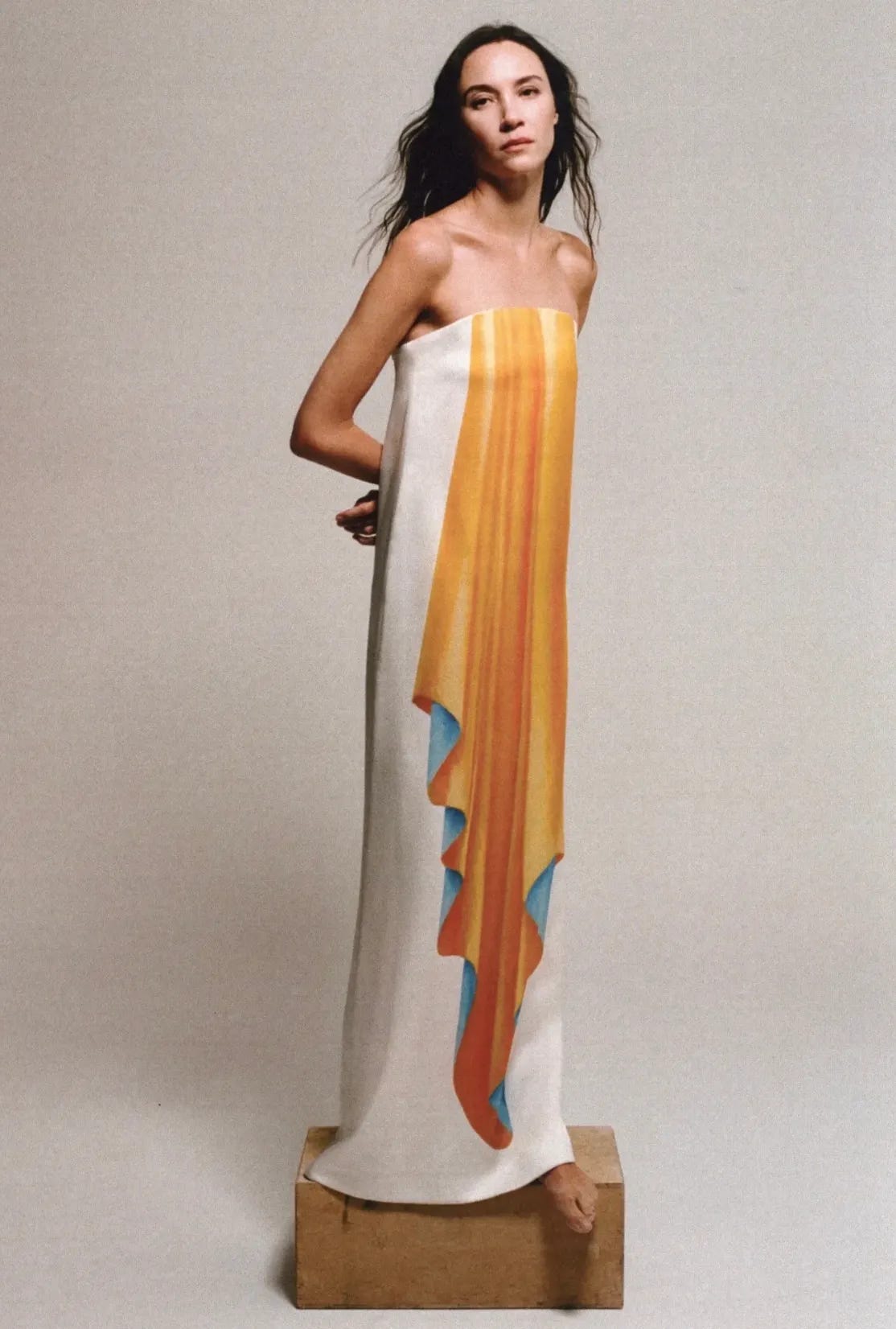
Emily Dawn Long, a CFDA award-nominated fashion designer, takes us behind the literal curtain that inspired part of her newest collection.
— in BUG ME!
The entire SS27 collection came together in about 60 days and all in New York City—which is wild since we also made a film to go with it. It all started with the skirt (which we will get to later in another post), but the main theme that I kept coming back to was this short case study on the nature of folds in relation to fabrics. Not only a ruffle, but the shadow play you get within large draped fabrics.
I also have a large obsession with Petra Blaisse (shout-out to her partner, Prada’s Rem Koolhaas). Petra is a curtain artist and landscape designer. She is major. We should circle back to her another time, but here are some of my favorites:
We were also incredibly inspired by Swedish painter Torbjörn Vejvi, whose flattened surfaces test the boundaries of dimension. The drape-front skirt and dress, in particular, borrow their logic from these ideas. I folded one of Torbjörn’s paintings as I saw it as a skirt!
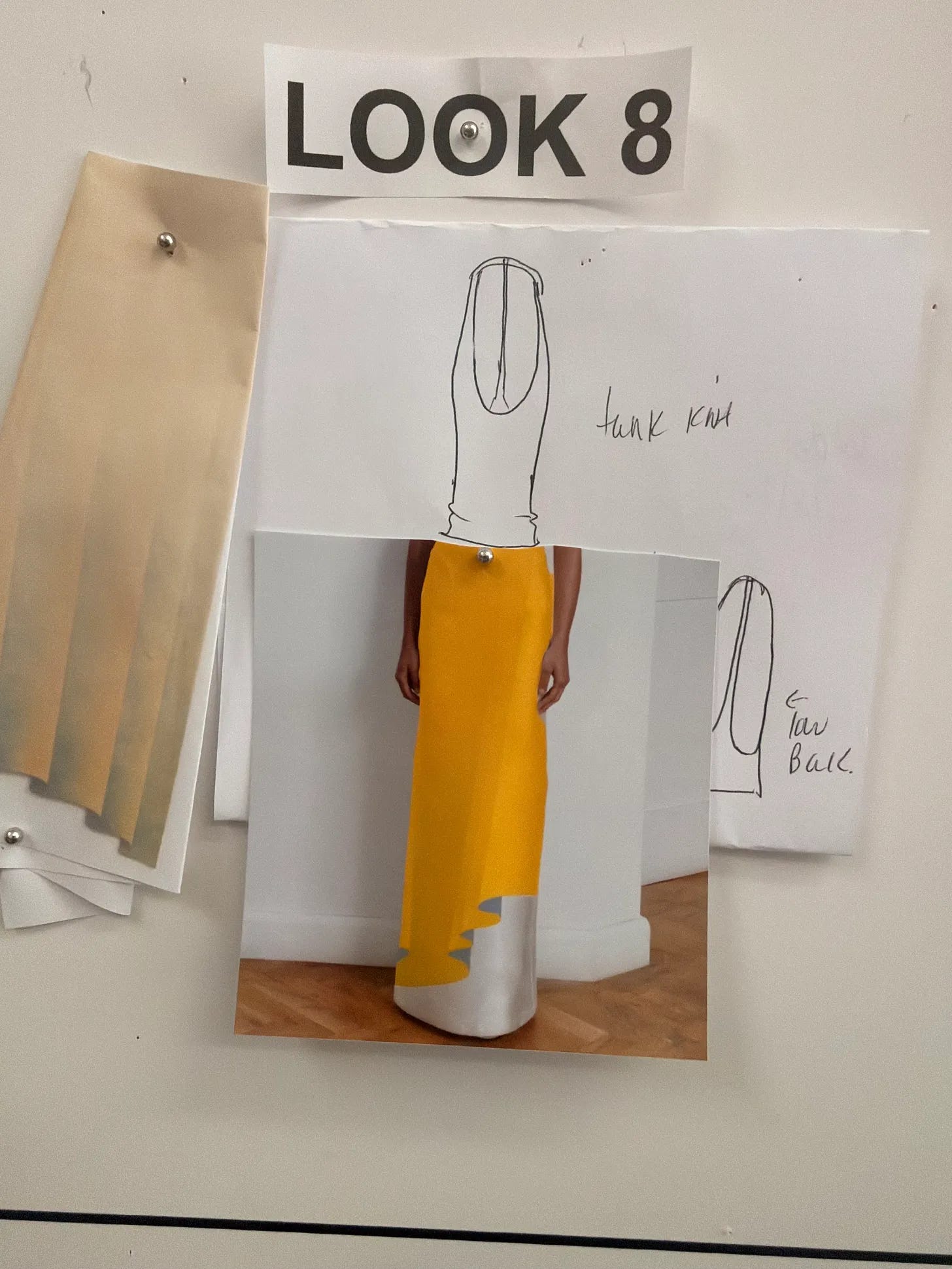
Now my brain goes: “I love this, how do we do this?” I immediately think of my dear friend Kira’s boyfriend, Ian Stanton, who is a very talented realist painter.

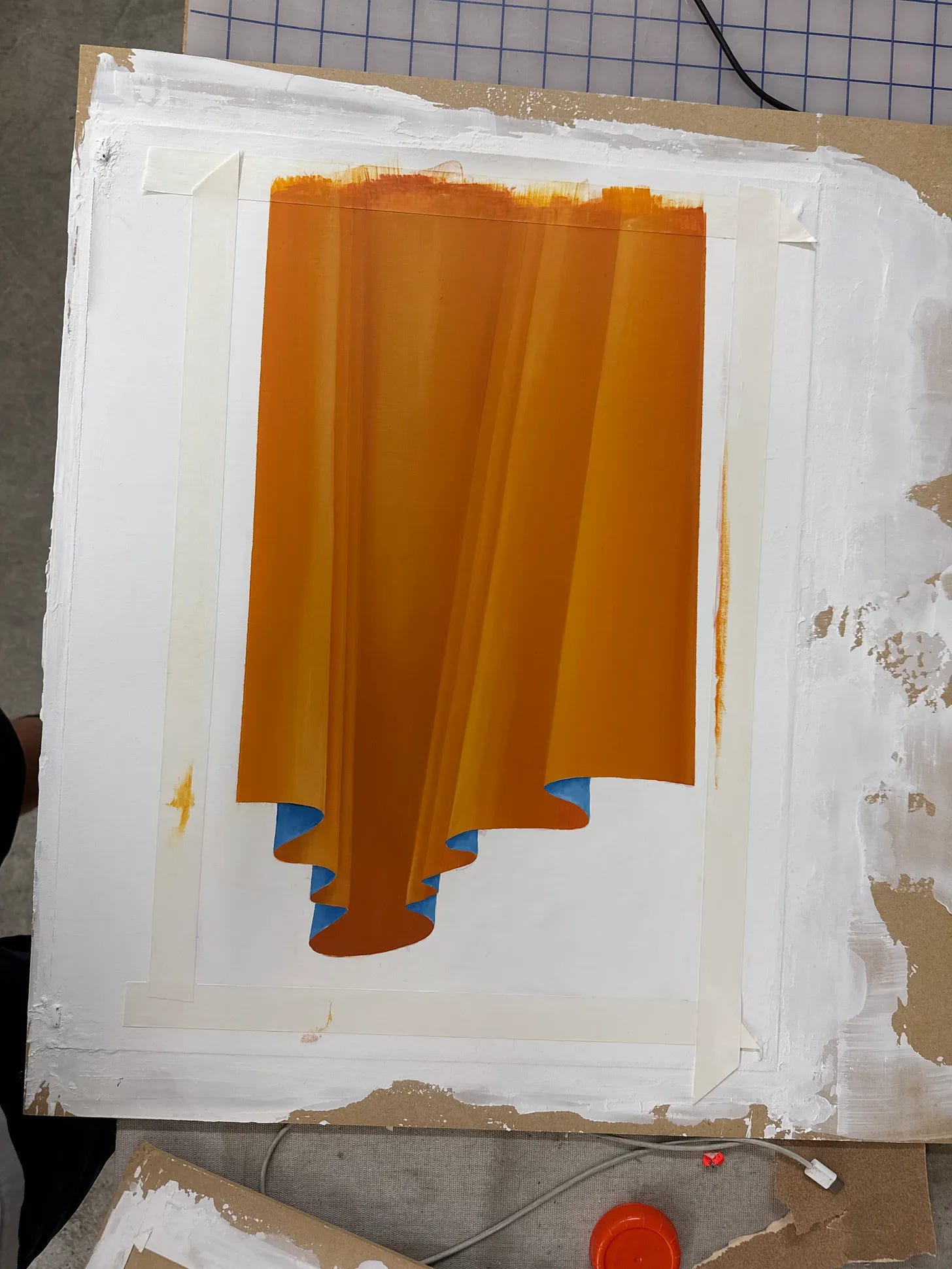
It was crazy to watch my idea come to life so exactly. Oil painted on canvas.
Now on our end, we were making a muslin for the skirt and the column dress, and had the white silk prepped for printing. Ian is based in LA, so we had to get the oil paintings scanned. But because they were oil paintings, you have to wait days for them to dry, so it was very down to the wire.

TOUGH GOODBYES

READING
Books across the board aren’t selling like they used to, but nonfiction has been hit particularly hard. Sean deLone investigates.

— in Dear Head of Mine
This is not one of those periodic “End of Reading” Atlantic clickbait essays. Americans—well, the kind who read books or newsletters about books—are well-versed in the challenges with literacy and education that have stretched on for decades. Rather, today we’re tackling the multi-year, fairly rapid—at least relative to book industry speed—radical change that book publishing has experienced over the past decade.
First, the entire industry boomed in Covid—writing is a hobby and reading for pleasure is, too—and has trudged along as it usually does, staying flat, growing a little over the years since 2020. But for the past decade the market for nonfiction has slowly collapsed. What has happened in the last ten years is that the overall industry has grown modestly, but fiction and nonfiction have basically flipped positions. In 2015, 6 of the top 25 bestselling hardcover books—this is a not-perfect but useful proxy for new books published—were fiction. In 2025, 18 of the top 25 hardcover books were fiction, meaning only 7 were nonfiction, almost an exact inversion of ten years ago.
The nonfiction collapse has profound implications for the industry. Nonfiction, historically, has always been seen as the more stable part of the business for logical reasons. The demand for nonfiction has always felt more predictable than fiction. Novels are complete imaginations often written by relatively obscure strangers. Nonfiction has experts and clear topics of interest. Want to lose weight? Grab a diet book. Want to learn about World War II? You got options. Presidential memoir? Maybe not these days, but sure. And nonfiction books are written mostly by famous people or experts or popular quacks—also known as people with a built-in “platform.”
Nonfiction being more predictable and stable means that nonfiction book advances have typically had a higher floor than those of fiction and, somewhat counterintuitively, are sold on less material. Celebrities have probably gotten millions for a cocktail-napkin-worth of material (if that). Other nonfiction proposals can range anywhere from 30 to 120 pages but usually end up in the middle of this range. You’re paying the author for their public stature, not necessarily their literary prowess. These books are treated more like a commission. The term “book advance”, although it refers to all books, likely comes out of nonfiction because authors are advanced a stack of money to entice them to set aside some of their time—instead of engaging in speaking, television, teaching, politics—to write a book. Whereas most novelists are advanced money to revise a full manuscript they’ve already written.
The paradigm of nonfiction being the more stable category is no longer the case. Part of this is platform unpredictability—it is less and less certain which platforms will translate directly to book sales. Media also isn’t as concentrated; you can’t depend on coverage on a few national news programs to push out copies, but rather a parasocial connection—even with a relatively smaller reach—between author and reader is likely to translate to stronger sales. Bunnie Xo has a large social media following, for instance (2 million on Instagram) but isn’t an established household name such that you’d think her book would be the third-best-selling nonfiction hardcover this year.
However, the nonfiction decline is far less about the changing nature of “platform” and the fractured media landscape, and more about a precipitous falloff in demand.

LUXURY

Art & Photography: , , ,
Writing: , , , , , ,


Netflix UK is now on Substack. Its first post is penned by Emma Corrin, who plays Elizabeth Bennet in the forthcoming Pride and Prejudice adaptation.
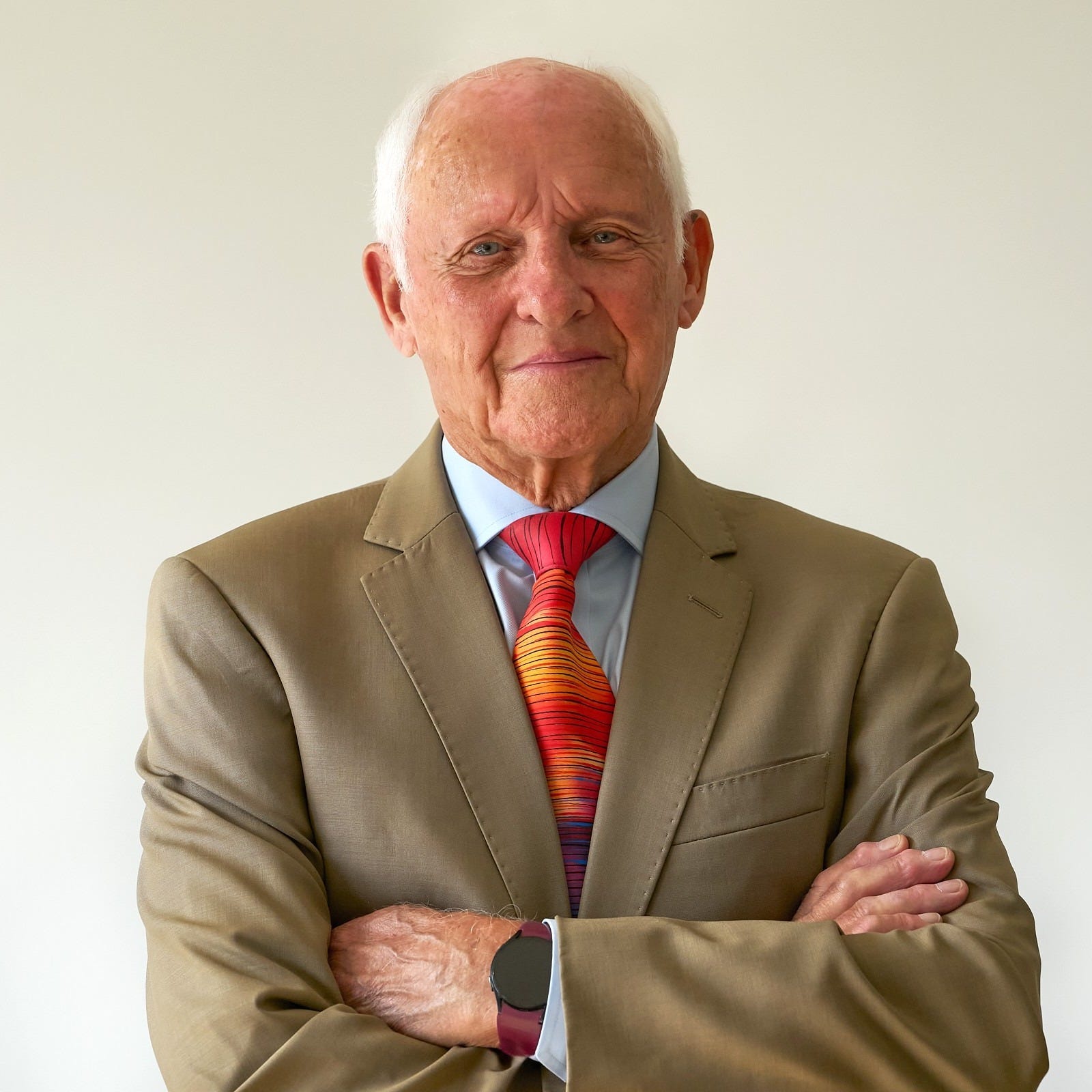
Dickie Arbiter, a former Buckingham Palace spokesman to the late Queen Elizabeth II and a royal commentator, has launched on Substack.

Scott Evans’s podcast, House Guest, now has a companion Substack where he’ll be sharing bonus content.

Stacey Solomon has brought her newsletter to Substack. She’ll be sharing advice and “covering everything from health and wellbeing to money, travel, gardening, beauty & fashion.”
Basketball Hall of Famer and three-time NBA champion Dwyane Wade has joined Substack, along with his longtime business partner and fellow former college basketball star Chad Easterling, to launch Dryve Performance, where they will weigh in on life and basketball and host live chats with their subscribers.

Andrew Pierce, the Daily Mail’s long-standing political commentator and broadcaster, is now on Substack.

Inspired by the writers and creators featured in the Weekender? Starting your own Substack is just a few clicks away:

The Weekender is a weekly roundup of writing, ideas, art, audio, and video from the world of Substack. Posts are recommended by staff and readers, and curated and edited by out of Substack’s New York office.
2026-09-15 01:01:57
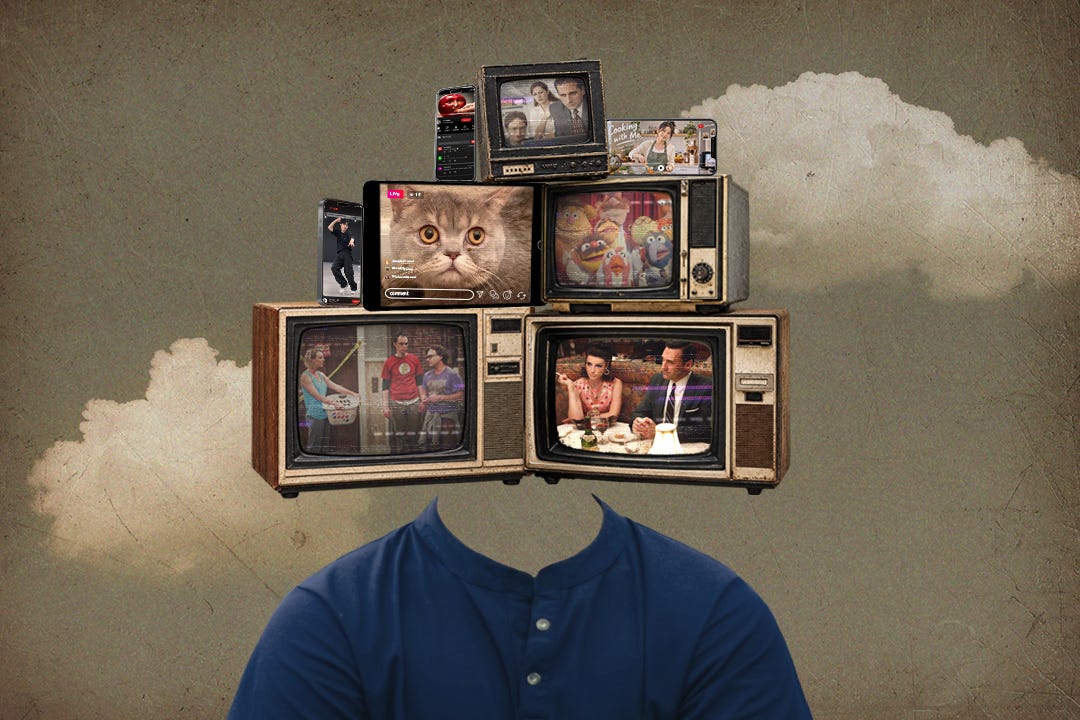
To kick off awards season, The Substack Post asked , the fashion and culture writer behind I Heart Mess and web editor for Interview Magazine, to sound off on the state of modern entertainment.
With the Emmy Awards right around the corner, the thinkpiece industrial complex on the modern state of television has hit a fever pitch. The predominant theme of these hot takes seems to be that it’s time to sound the death knell for quality programming.
It’s true we are officially living in the brain rot era—a time when slop reigns supreme and our attention spans have never been shorter. A time when a frighteningly large segment of the population would prefer to watch a two-hour movie broken up across 100 TikToks played at 2x speed rather than sit their butts down in a physical theater. But even so, I would like to offer my own counterargument on modern entertainment, which is that these postmortems are just the latest in the premature eulogies we’ve been reading for centuries about every form of content we consume and the new mediums through which we consume them. Plus, Walter Benjamin really already said all there is to be said on the topic in 1936: “The situations into which the product of mechanical reproduction can be brought may not touch the actual work of art, yet the quality of its presence is always depreciated… that which withers in the age of mechanical reproduction is the aura of the work of art.”
We have been on the precipice of entertainment’s total collapse since its invention, and yet, miraculously, we continue to be entertained. But there’s a more salient question that this debate raises: Is TV bad now, or are we all just bad at watching it?
To make my case, I first need to out myself as old. I still remember a time before streaming, when DVDs were delivered one by one via snail mail, often scratched and totally unwatchable. In fact, I remember the days before modern prestige television was even a twinkle in an HBO executive’s eye. Television was traditionally the redheaded stepchild of Hollywood, antithetical to serious thespians seeking to become global superstars. Today, those distinctions between the big and small screen no longer hold. A-list actors appear on both with no professional qualms, both formats boast multimillion-dollar blockbuster budgets, and TV has unequivocally produced some of the most enduring shows and characters of the past 25 years (Walter White, Blair Waldorf, Tony Soprano—hell, Homer Simpson). With the uptick in streaming platforms, not only can we now watch all the good new shows that are coming out, but almost every piece of television ever created. There has never been more content targeting niche interests and audience demographics. So maybe it’s not that it’s bad, but that we’re living through an unprecedented glut of content and suffering from the decision fatigue that such access entails.
But let’s say you do manage to land on one of the countless award-winning programs now at your fingertips. How is your media consumption hygiene? A phone eternally glued to your hand seems like a safe bet, eyes trained on that tiny screen at least 50% of the time while your brain ricochets through to-do lists, schedules, and various AI-generated Reels. And again, why should our assessment of the quality of programming hold any weight when so many of us are spending our time supposedly watching TV by actively not watching it? In fact, if you are one of the people lamenting the suckage of modern television while also watching it with your phone permanently out, you are responsible for one of the few tangible reasons TV is worse now.
Executives know the viewing public’s attention is divided at best and nonexistent at worst. It’s why they have started creating increasingly formulaic plots and heavy-handed expositional dialogue so as not to further confuse the viewer, double-fisting their remote and a heated game of Candy Crush. TV is always a reflection of its consumers. If all the shows are bad, that still represents our taste as a nation. Somewhere out there, an audience is raptly watching Two and a Half Men and The Big Bang Theory, and no amount of takedowns about why those are bad sitcoms is going to yuck that yum.
TV is always a reflection of its consumers. If all the shows are bad, that still represents our taste as a nation.
Our relationship to television also mirrors our current relationship to reading (stick with me for a second, I swear I’m going somewhere). In brief, we’ve become spectacularly bad at it. We’ve all seen the reports of a literacy crisis among Gen Z and Gen Alpha, who are seemingly not reading and don’t seem to understand what they’re reading when they are. As someone who publishes her writing on the internet on a daily basis, I can attest that general reading comprehension is in the trash. But what I haven’t seen addressed is how that lack of understanding and imagination impacts our understanding of theater, cinema, and other works of art, including television. Because if you can’t understand the plot line of a book, or the nuances of its character development, I won’t hold out hope that you’re going to suddenly get it when the story is acted out before you.
But perhaps the ultimate culprit in our Negative Nancy attitude toward the shows we’re watching isn’t us as individual viewers but the frenetic discourse surrounding the media we consume. The moralizing, grandstanding, and standoms can quickly become deafening, and instead of turning to professional critics and other experts in their fields, more often than not, we are getting these TV talking points fed to us by faux-outraged TikTokers and some of the biggest prudes you’ve ever met in your life. Not to mention that when a piece of media, or even a concept, becomes popular now, it’s mined for content from every conceivable angle. It is impossible to simply enjoy something on its own. Anything relevant will be made viral, then made unpopular again in its suffocating ubiquity—such is the law of late-stage capitalism.
So in the end, I ask again: Is it TV that sucks, or is it us? And if it’s the latter, at least that’s something we all have the power to start changing today.

Want to keep the conversation going? Join Emily and a panel of fellow culture writers for more debates and hot takes as they cover the Emmy Awards live tonight, right here on Substack.